2SA968 / 2SC2238 Family
Executive Summary
- A milestone in 1980s Japanese audio engineering — Achieved Vceo=160V, fT=100MHz, and Pc=25W
- Four package variations — Available in TO-220/TO-66/TO-251/TO-252/TO-220F. The TO-66 variant is a rare device that paired an fT=100MHz-class die with a package already fading from mainstream use around 1980
- High-voltage suffix A/B variants — Vceo=180V/200V options offered in TO-220 and TO-220F packages
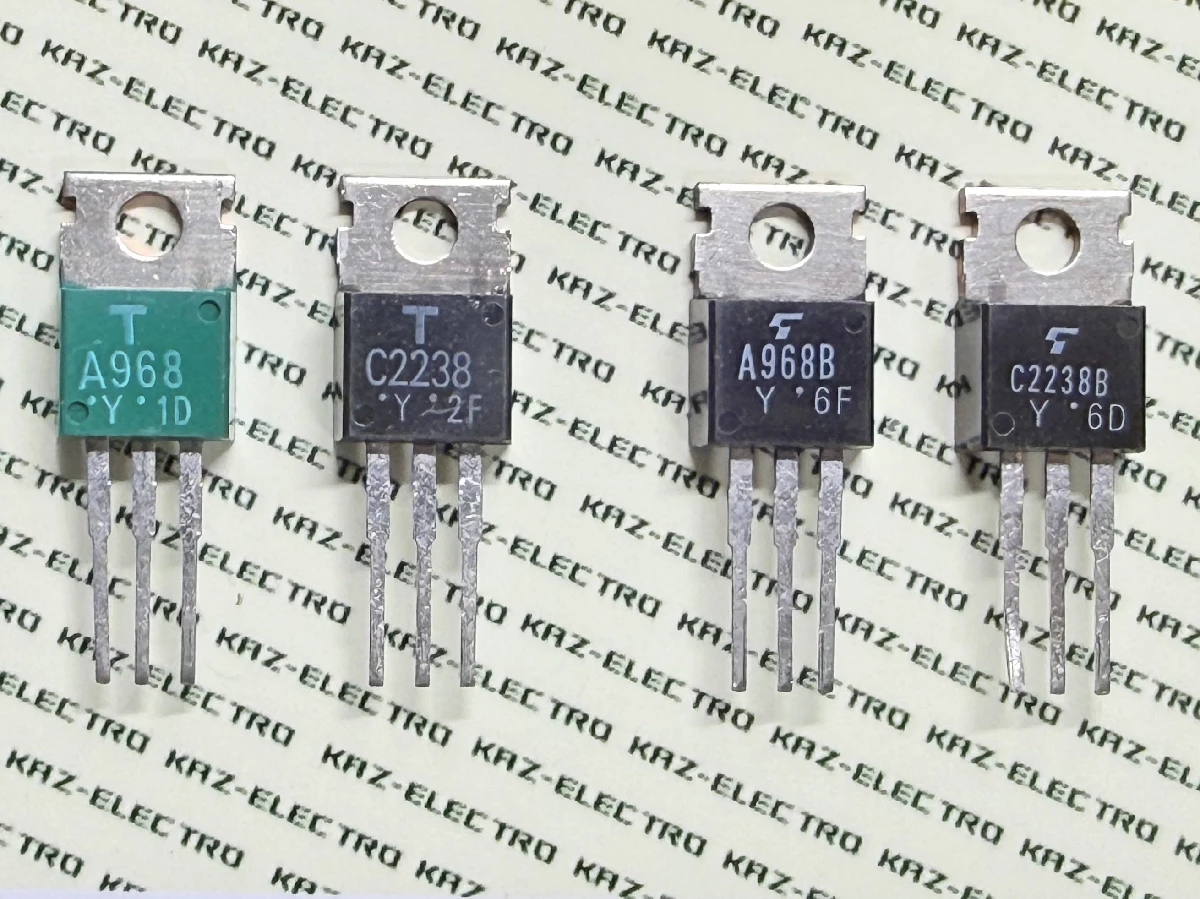
A complementary pair from Toshiba designed for the driver stage of audio power amplifiers. Starting with the TO-220 package, the family expanded across four generations of packaging — CAN, full-mold, and SMD — an exceptionally broad lineup rarely seen among Japanese discrete semiconductors. This article covers the full range of package variations along with cross-reference information.
Contents
This article presents an overview of the 2SA968/2SC2238 family organized into four package categories. For detailed specifications of each package variant, please refer to the individual articles.
| Category | Section | Contents |
|---|---|---|
| Overview | 1. Overview | Product positioning, significance in 1980s audio engineering |
| 2. Family Lineup | Four package categories | |
| Practical Guide | 3. TO-220 Original | 2SA968/2SC2238 (standard/A/B) |
| 4. Derivative Packages | TO-66 / TO-251/TO-252 / TO-220F / Discussion | |
| 5. Cross-Reference Guide | Replacement info / Disclaimer / Kaz’s Cross-Reference / Current-Production Alternatives / Contemporary Competitors | |
| Appendix | 6. Gallery | Physical specimens from the 1970s through the 1990s |
| Summary | 7. Sources and References | Source list |
Practical information is covered through Section 5. For technical background and discussion, see Section 4.4.
1. Overview
1.1 Product Overview
A medium-power complementary pair in the TO-220 package designed for amplification. First appearing in 1978, this long-running product remained in production until the mid-1990s. With a high breakdown voltage of Vceo=160V and a high transition frequency of fT=100MHz, the device offered generous headroom as a driver for audio amplifiers. The combination of high breakdown voltage and high fT suggests that Hi-Fi performance was a primary design goal.
1.2 A Milestone in 1980s Japanese Audio Engineering
In the 1970s, as audio equipment manufacturers competed fiercely to develop high-performance amplifiers, semiconductor makers responded by investing heavily in product development for the audio market. By 1975, mass production of complementary power transistors was well underway at several companies, and Toshiba released devices such as the 2SA814/2SC1624 (120V, 1A, 30MHz), 2SA815/2SC1625 (100V, 1A, 30MHz), and 2SA839/2SC1669 (150V, 1.5A, 6MHz) in rapid succession. However, neither breakdown voltage nor fT had yet reached satisfactory levels.
Development proceeded at a brisk pace, and just three years later in 1978, the 2SA968/2SC2238 (160V, 1.5A, 100MHz) appeared. These specifications represented a milestone for the era, and the device was widely adopted by audio manufacturers including Sansui and Sony.
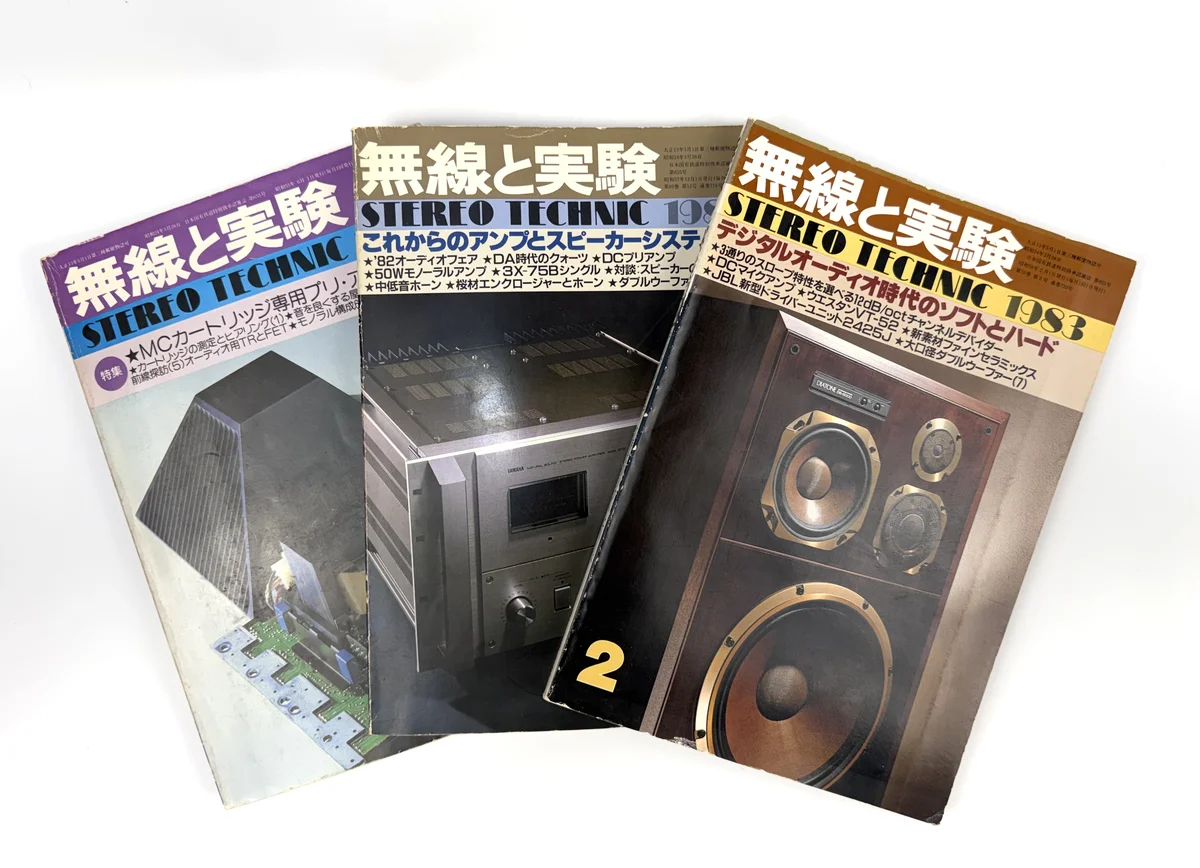
Entering the 1980s, the device gained popularity among DIY amplifier builders as well, with frequent appearances in MJ Audio Technology magazine. It also found favor in professional wideband amplifiers. Regardless of whether the application was professional or amateur, the 2SA968/2SC2238 earned its place as a standard device. The fact that it remained in production for approximately 18 years speaks to its level of refinement.
Panasonic, Sanyo, NEC, and Hitachi were also releasing comparable devices in competition during this period. A glimpse of this can be seen in the cross-reference table in this article. Complementary devices with fT in the 100MHz class were a standard offering in every major manufacturer’s lineup — that was the landscape of the Japanese audio semiconductor market in the 1980s.
As of 2025, however, searching for TO-220 audio BJT complementary pairs on DigiKey or Mouser yields very few options. Representative examples include the MJE15031/MJE15030 (150V, 8A, fT=30MHz) and MJE5730/TIP48 (300V, 1A, fT=10MHz), but nothing in the fT=100MHz class is to be found.
Looking at Japan, Sanken’s website lists the 2SA1667/2SC4381 (150V, 2A, fT=20/15MHz) and 2SA1668/2SC4382 (200V, 2A, fT=20/15MHz) as active products, but overall, through-hole discrete devices appear to be rapidly disappearing from the market.
1.3 Successor: 2SA1837/2SC4793
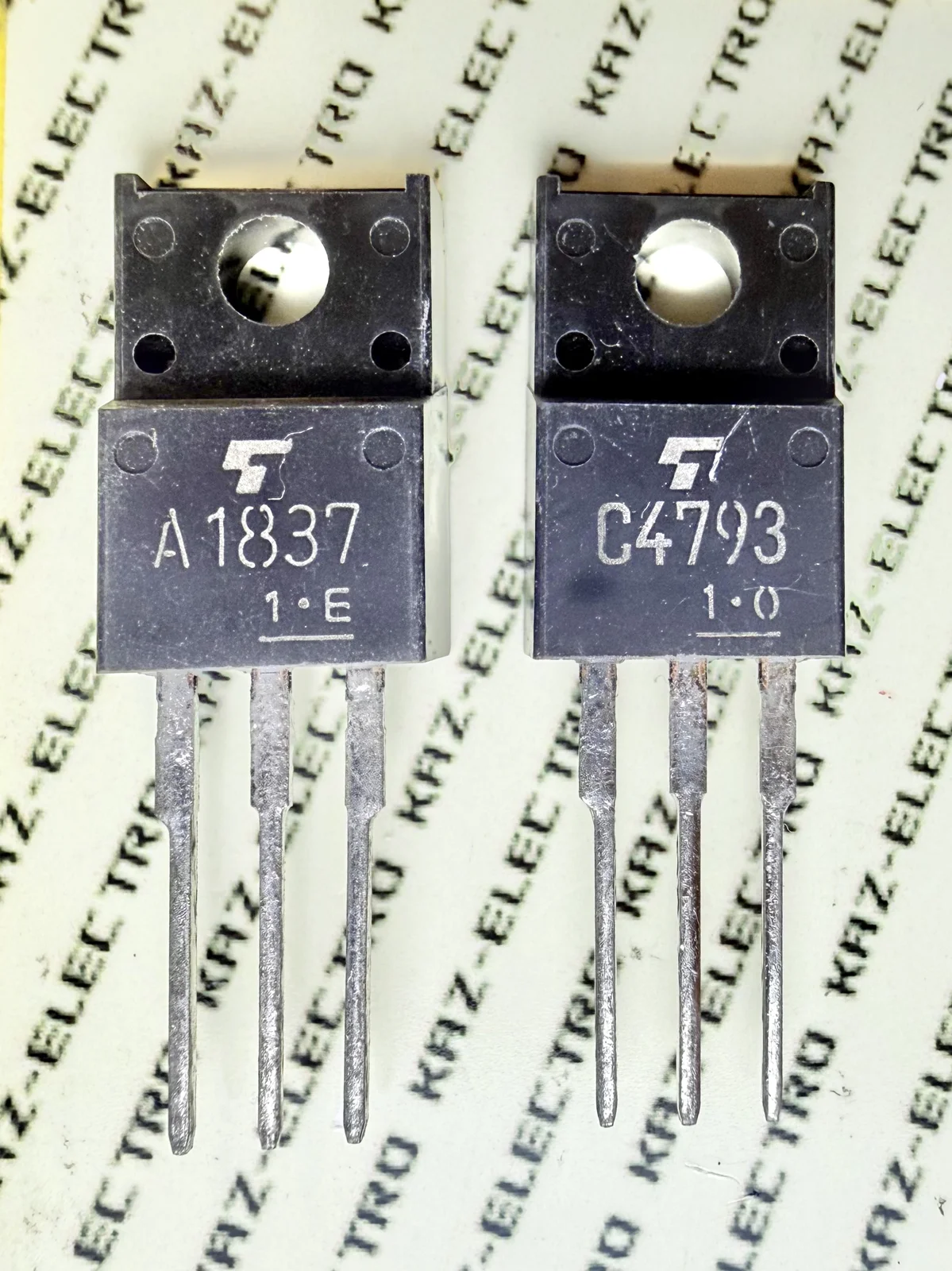
The 2SA968/2SC2238 was discontinued in the 1990s, and Toshiba designated 2SA1837/2SC4793 as the recommended replacement. However, these successors were also discontinued in the 2010s.
The 2SA1837/2SC4793 offers Vceo=230V, making it capable of replacing the entire 2SA968/2SC2238 family including the high-voltage variants (suffix A/B). Its fT is 70/100MHz (PNP/NPN), with the PNP side somewhat lower than the 2SA968’s 100MHz. On the other hand, its TO-220AB full-mold package eliminates the need for insulation sheets when mounting to a heatsink, making it easier to work with.
2. Family Lineup
The overall family structure is as follows.
| Package | Part Number | High-Voltage Variants | Status |
|---|---|---|---|
| TO-220 (Original) | 2SA968/2SC2238 | suffix A (Vcbo/Vceo=180V) suffix B (Vcbo/Vceo=200V) |
Discontinued |
| TO-66 (CAN) | 2SA969/2SC2239 | None | Discontinued (1983) |
| TO-251/TO-252 (SMD) | 2SA1225/2SC2983 | None | 2SA1225: Active 2SC2983: NRND (as of 2025) |
| TO-220F (Full-Mold) | 2SA1306/2SC3298 | suffix A (Vcbo/Vceo=180V) suffix B (Vcbo/Vceo=200V) |
Discontinued |
3. TO-220 Original — 2SA968/2SC2238
Manufacturer: TOSHIBA
Application: Power Amplifier, Driver Stage Amplifier
Package: TO-220
Debut: 1978
Discontinued: ca. 1996
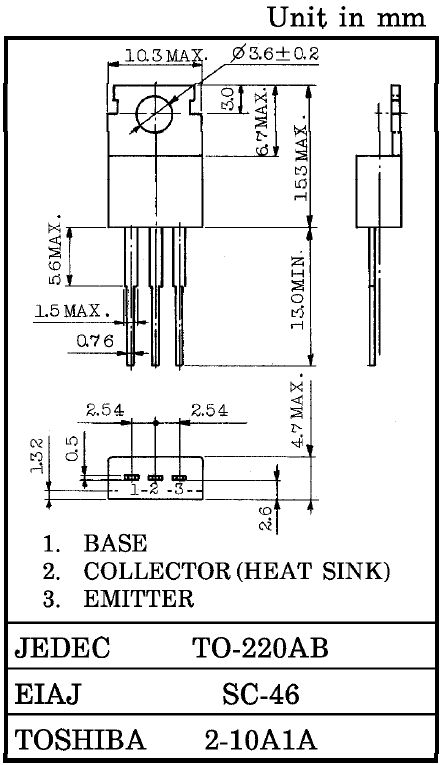
3.1 Key Features
- Designed for audio amplifier driver and power stages
- High breakdown voltage: Vceo = 160V
- Medium power: Pc = 25W (Tc=25°C)
- High current gain: hFE = 70–240
- High-frequency performance: fT = 100MHz (typ)
3.2 Absolute Maximum Ratings
| Parameter | 2SA968 | 2SC2238 |
|---|---|---|
| Vcbo (V) | -160 (standard) -180 (suffix A) -200 (suffix B) |
160 (standard) 180 (suffix A) 200 (suffix B) |
| Vceo (V) | -160 (standard) -180 (suffix A) -200 (suffix B) |
160 (standard) 180 (suffix A) 200 (suffix B) |
| Vebo (V) | -5 | 5 |
| Ic (A) | -1.5 | 1.5 |
| Pc (W)Tc=25°C | 25 | 25 |
Source: TOSHIBA Semiconductor Databook 1980
The high-voltage variants (suffix A/B) differ only in Vcbo and Vceo; all other ratings and electrical characteristics are identical to the standard version.
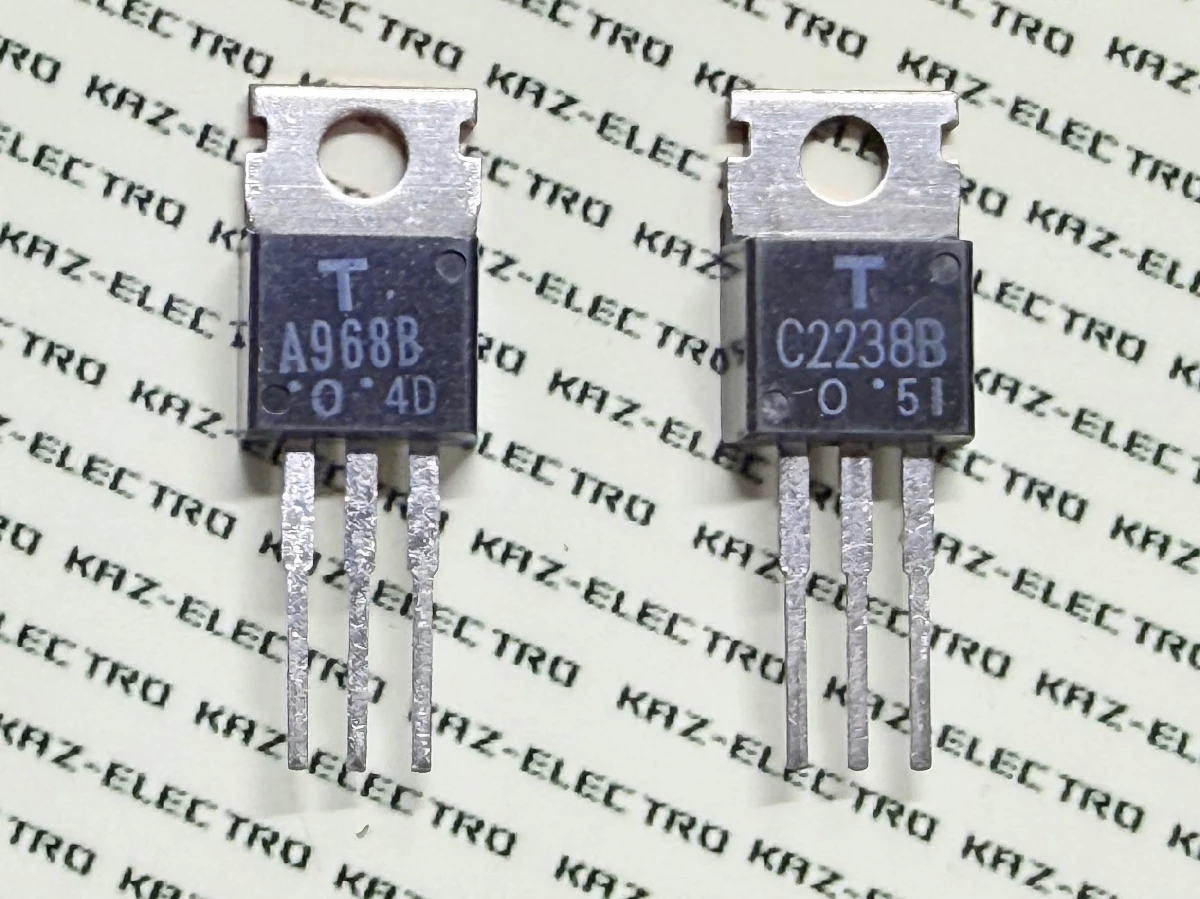
3.3 Electrical Characteristics
| Parameter | 2SA968 | 2SC2238 |
|---|---|---|
| hFEVce=5V, Ic=100mA | O: 70–140 Y: 120–240 |
O: 70–140 Y: 120–240 |
| fT (MHz) | 100typ | 100typ |
| Cob (pF) | 30typ | 25typ |
Source: TOSHIBA Semiconductor Databook 1980
3.4 Product History
| Date | Source | Status |
|---|---|---|
| 1976 | TOSHIBA Semiconductor Databook 1977 | Not listed in databook |
| 1978 | CQ Publishing “Transistor Cross-Reference” 1978 | First appearance. Estimated launch year |
| 1980 | TOSHIBA Semiconductor Databook 1980 | First databook listing |
| 1982 | Toshiba Semiconductor Product Overview 1982 | Listed in catalog (active). TO-66 variant 2SA969/2SC2239 dropped from catalog |
| 1983 | TOSHIBA Semiconductor Databook 1983 | Listed in databook (active) |
| 1988 | Toshiba Semiconductor Product Overview 1988 | Listed in catalog (active) |
| 1990 | TOSHIBA Power Transistor Databook 1990 | Removed from databook. However, not yet listed in the end-of-life section (likely NRND) |
| ca. 1996 | Estimated from date codes on specimens in this collection | Production ended (estimated) |
| 1999 | TOSHIBA Power Transistor Databook 1999 | Explicitly listed as discontinued in the end-of-life appendix |
| As of 2025 | Toshiba Electronic Devices & Storage Corp. website | 2SA1225: Active. 2SC2983: NRND |
4. Derivative Packages
Three derivative variants of the 2SA968/2SC2238 exist, all sharing the same die but housed in different packages. Each will be covered in detail in dedicated articles, but here we provide an overview of each as part of this family-level discussion.
4.1 2SA969/2SC2239
A TO-66 metal CAN package variant. This short-lived product appeared only in the 1980 Toshiba databook. It was already dropped from the 1982 Toshiba Semiconductor Product Overview catalog. The 1983 databook (both Japanese and English editions) states: “As of April 1983, 2SA969 is discontinued (replacement: 2SA968), and 2SC2239 is on maintenance status (replacement: 2SC2238).” Availability was limited even when the device was current, and as of 2025, it is an extremely rare item.
To the best of this author’s knowledge, a TO-66 complementary pair with fT in the 100MHz class is an exceedingly rare existence, both in Japan and internationally.
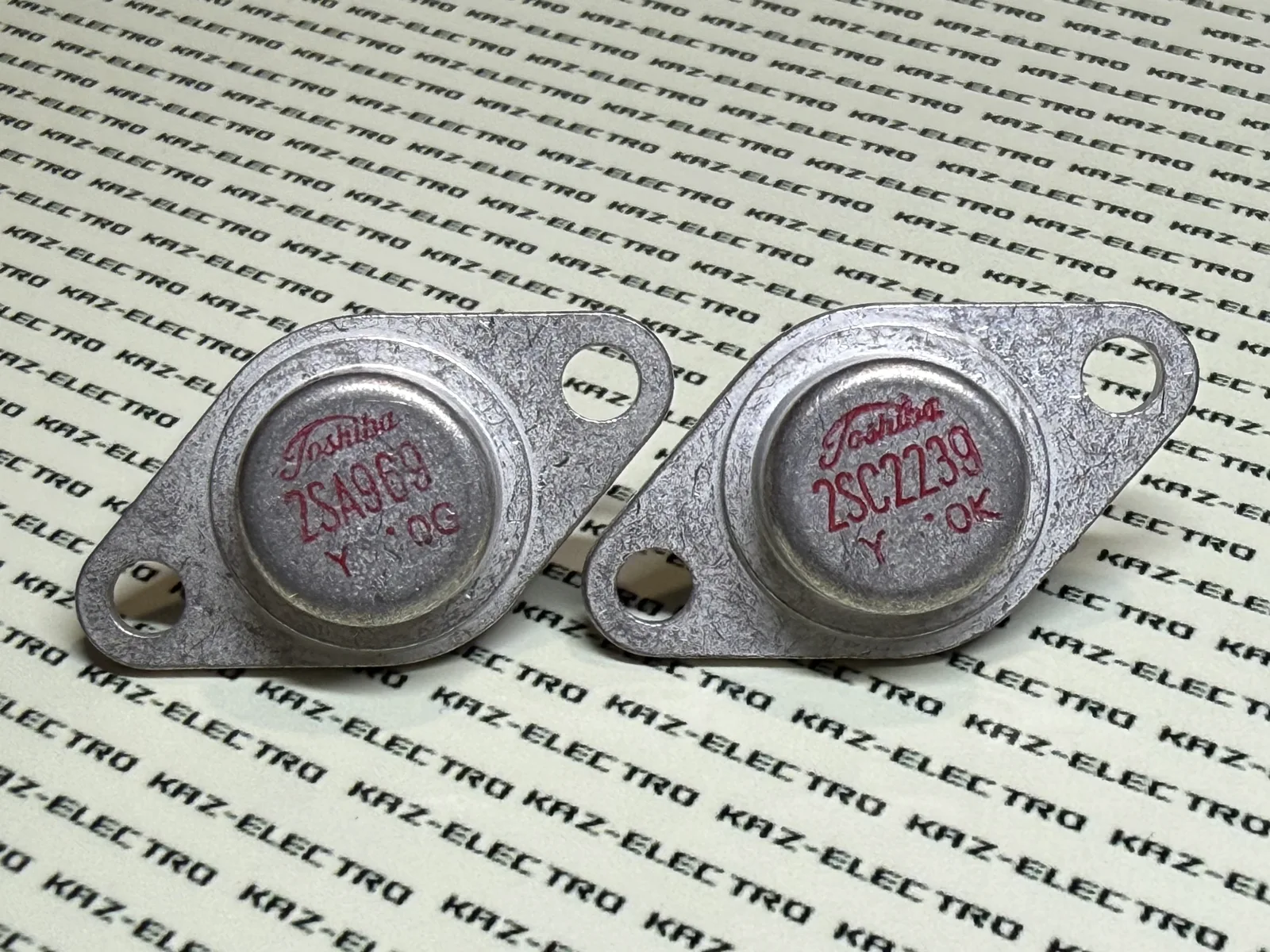
→ A detailed article on the 2SA969/2SC2239 is planned.
4.2 2SA1225/2SC2983
A compact molded package in the TO-251/TO-252 form factor, designed with ceramic substrate mounting in mind. It belongs to the wave of hybrid-IC-compatible devices introduced by various manufacturers in the early 1980s. With surface mounting now the norm, this variant has outlived the original TO-220 2SA968/2SC2238, becoming an even longer-running product. As of 2025, the PNP side (2SA1225) remains active while the NPN side (2SC2983) is NRND (Not Recommended for New Designs). It is not uncommon among legacy complementary power transistors for only the PNP side to survive, likely because PNP transistors retain demand in applications such as high-side switches and series regulators.
💡 A Suggestion from Kaz: Using the TO-251/TO-252 Variants
If you need a 2SA968/2SC2238 for restoring a vintage amplifier, there is no need to resort to “equivalents” just because the original is hard to find.
The 2SA1225/2SC2983 (TO-251/TO-252) is not merely a compatible replacement — it is very likely the same die housed in a different package.
Comparing datasheets reveals that the application, absolute maximum ratings (except Pc), electrical characteristics, and characteristic curves are virtually identical, strongly suggesting this is the same die in a different package. The difference in Pc is attributable to the package’s thermal dissipation capability; the die itself is very likely the same.
The TO-251/TO-252 is a compact surface-mount package with a smaller heat dissipation area. However, by soldering an appropriately sized copper pad to the exposed thermal tab on the underside, it should be possible to achieve thermal performance approaching that of the TO-220 or TO-66 variants.
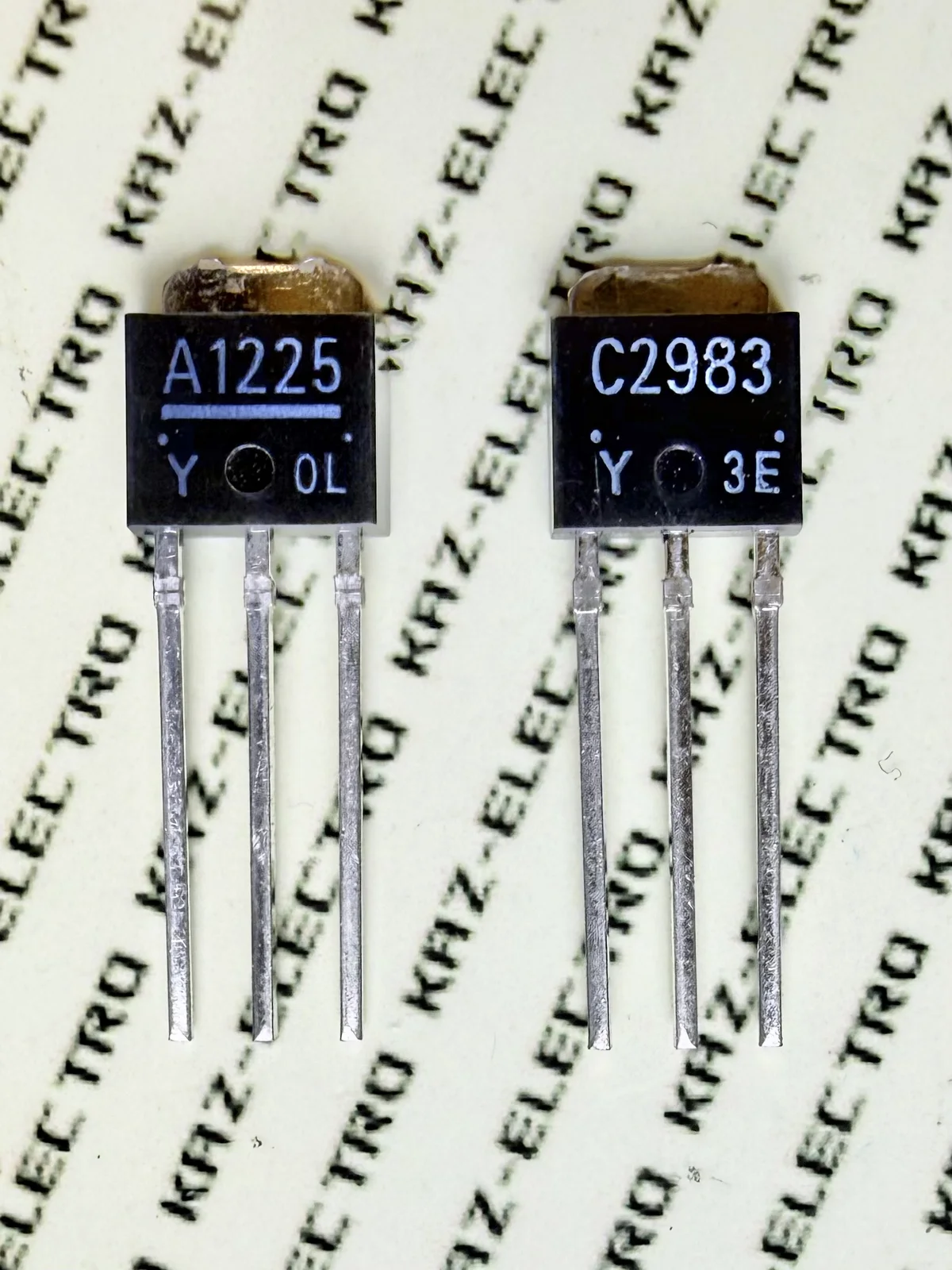
→ A detailed article on the 2SA1225/2SC2983 is planned.
4.3 2SA1306/2SC3298
A full-mold variant of the TO-220 package, where the collector flange is also encapsulated in resin. This eliminates the need for mica or Mylar insulation sheets when mounting to a heatsink, improving ease of use.
Note that both the original TO-220 and the TO-220F full-mold variants offer high-voltage options (suffix A/B).
| Suffix | TO-220 (Original) | TO-220F (Full-Mold) | Vcbo / Vceo |
|---|---|---|---|
| suffix A | 2SA968A/2SC2238A | 2SA1306A/2SC3298A | 180V |
| suffix B | 2SA968B/2SC2238B | 2SA1306B/2SC3298B | 200V |
The TO-66 variant (2SA969/2SC2239) and TO-251/TO-252 variant (2SA1225/2SC2983) do not have high-voltage options.
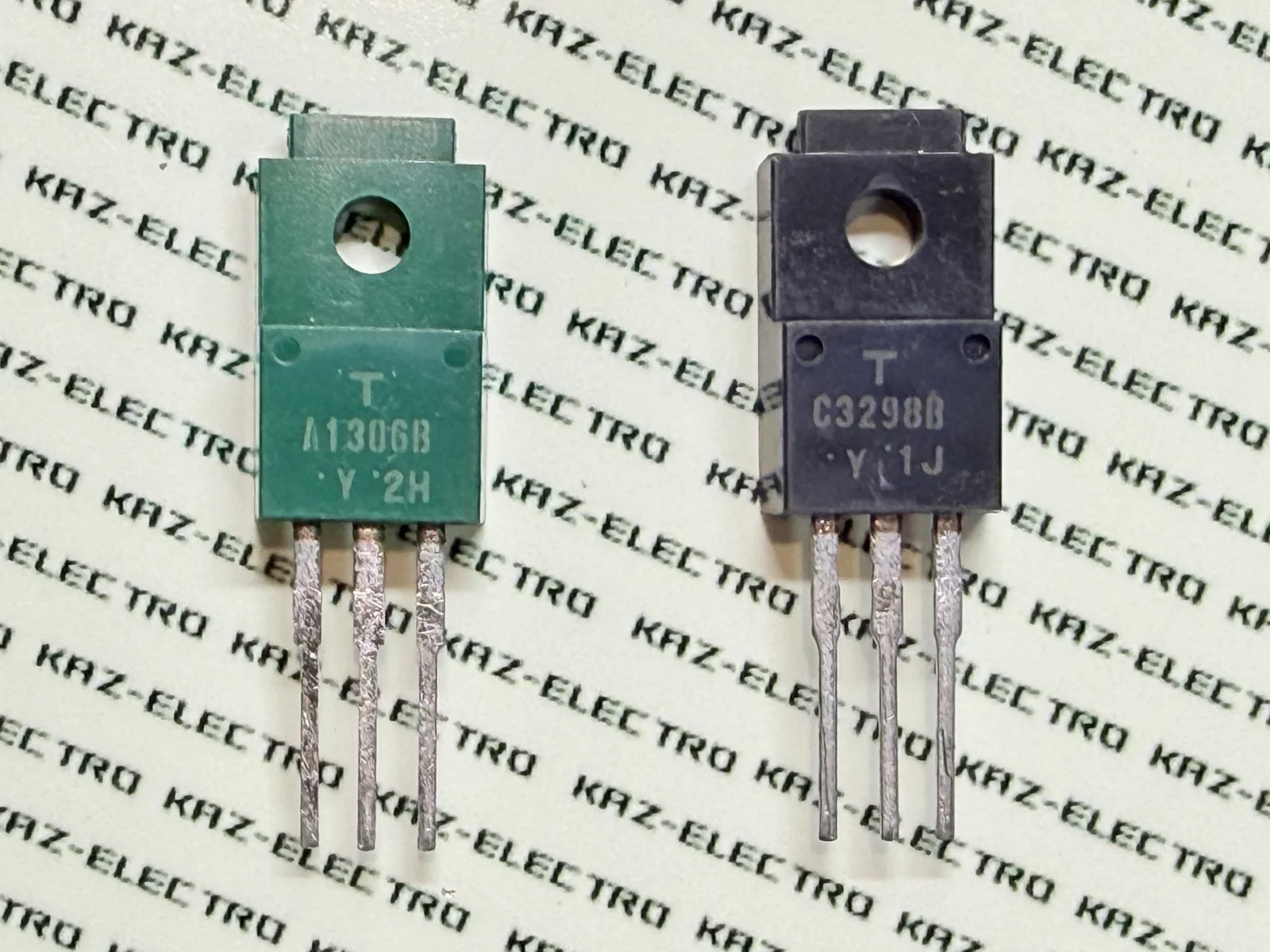
→ A detailed article on the 2SA1306/2SC3298 is planned.
4.4 Discussion: Why Were Multiple Packages Necessary?
In the driver and output stages of power amplifiers, the heat generated by the die fluctuates with the signal as large-amplitude signals are amplified. This temperature variation affects transistor characteristics such as Vbe and hFE, which can introduce distortion components into the signal — a phenomenon commonly known as “thermal distortion.”
The TO-66 is an all-metal CAN package, and its thermal resistance tends to be lower under comparable mounting conditions than that of the TO-220. It is a product of an era when the pursuit of sound quality was taken to its fullest extreme.
Derivative variants also arose from manufacturing and assembly considerations. The TO-220 full-mold variant 2SA1306/2SC3298 eliminates insulation sheets, reducing assembly labor — a response to the needs of the production floor. Meanwhile, the TO-251/TO-252 variant 2SA1225/2SC2983 was designed for hybrid ICs, with a collector fin that can be soldered directly to a ceramic substrate to secure the heat dissipation path.
The very fact that derivative variants emerged one after another to address diverse mounting requirements is itself a testament to an era when discrete devices were still thriving.
5. Cross-Reference Guide (Kaz’s Cross-Reference)
Contents of this section: A practical guide for restorers and repair enthusiasts, compiling recommended replacements from Toshiba, Sony, and CQ Publishing.
5.1 Replacement Information
This section compiles cross-reference information gathered from semiconductor manufacturers’ databooks and related literature.
5.1.1 Information Gathering Policy
This site has collected information on potential replacement complementary pairs based on application, breakdown voltage, characteristics (fT, Cob), and form factor (TO-220 or TO-220F pin-compatible devices).
5.1.2 Information Sources
The cross-reference table incorporates four categories of information: successor designations from Toshiba itself, general cross-reference data from CQ Publishing’s “Transistor Cross-Reference” (最新トランジスタ互換表) guides, information from Sony’s “Semiconductor Replacement Handbook” (ソニー補修用半導体ハンドブック) for service technicians, and original research by this site.
CQ Publishing (CQ Shuppansha) is a well-established Japanese technical publisher specializing in electronics and radio engineering. Their “Transistor Cross-Reference” series, published from the late 1970s through the early 2000s, has long served as a standard reference for identifying replacement semiconductors in Japan.
Sony, as a diversified electronics manufacturer, adopted a wide range of semiconductors across its product lines. The cross-reference information compiled in Sony’s internal service manuals — intended for Sony technicians repairing their own products — is considered useful for hobbyists attempting to repair Sony equipment, and has therefore been included in the table.
To make it immediately clear who recommended each replacement, a “Recommended by” column is provided in the table.
5.1.3 Ensuring Usability
The 2SA968/2SC2238 is a complementary pair, but due to differing views among recommenders, a replacement complementary pair is not always proposed as a matched set. In CQ Publishing’s cross-reference guides, it is not uncommon for only one side — either PNP or NPN — to be listed.
Therefore, on this site, even when a recommender has listed only the PNP or NPN side, the corresponding complementary partner is also included in the table, giving readers the freedom to evaluate replacement options more flexibly.
5.2 Disclaimer and Cautions
⚠️ Critical: Disclaimer and Cautions
The cross-reference information presented here is based solely on catalog specification comparisons and no actual in-circuit testing (operational verification) has been performed.
Substituting transistors is an action that may result in equipment malfunction or performance degradation. The information on this site is provided for reference purposes only, and this site assumes no liability whatsoever for any damage resulting from substitution work.
When attempting a substitution, carefully consider the following characteristics, make your selection at your own discretion, and proceed entirely at your own risk:
- Vceo — Insufficient breakdown voltage can cause device destruction
- Ic — Insufficient current capacity can cause overheating and destruction
- Pc — Must be verified in conjunction with thermal design
- fT — Large discrepancies can cause oscillation or waveform distortion
- Cob — Large discrepancies can cause overshoot
Extra caution is warranted under demanding conditions such as designs with narrow phase margin, operation near absolute maximum ratings, or operation at unusually low or high currents.
5.3 Cross-Reference Table — Replacement & Equivalent Parts
The table below presents replacement candidates for the standard 2SA968/2SC2238 (Vceo=160V).
Note that for the high-voltage grades 2SA968A/2SC2238A (Vceo=180V) and 2SA968B/2SC2238B (Vceo=200V), some candidates in this table have insufficient breakdown voltage.
It should also be noted that CQ Publishing’s cross-reference includes devices with Vceo=150V as replacements even for the standard 2SA968/2SC2238 (Vceo=160V). This presumably reflects a judgment that the device would not be operated at its absolute maximum rating, but this point deserves careful consideration.
Furthermore, this table includes devices with Vceo as low as 100V (2SB682/2SD712), 80V (2SD1136), and 60V (2SC1816) — well below the 160V baseline. This site faithfully records the cross-reference information published by CQ Publishing as part of its archival mission, but using these devices as direct drop-in replacements is extremely dangerous. They carry a risk of device destruction due to insufficient breakdown voltage.
CQ Publishing’s recommendations also include devices with extremely low fT (e.g., 2SB682/2SD712 at fT=8MHz). This is likely based on the assumption that the driver stage operates as an emitter follower, but since fT requirements vary depending on the circuit topology, this factor should also be thoroughly evaluated before making a decision.
In any case, depending on the circuit configuration and device operating conditions, there is a risk of oscillation, component damage, and other failures. Simple drop-in substitution is not recommended.
The “Voltage Warning!” notation in the table is applied to any device with Vceo (absolute value) below 200V. Be aware that the table includes devices with insufficient breakdown voltage not only for the high-voltage grades (suffix A/B) but also for the standard version (Vceo=160V). Always verify against the operating voltage of your circuit.
| Part Number | Maker | Vceo (V) | Ic (A) | Pc (W) | fT (MHz) | Cob (pF) | Recommended by | Notes |
|---|---|---|---|---|---|---|---|---|
| 2SA968/2SC2238 | TOSHIBA | -160/160 | -1.5/1.5 | 25 | 100/100 | 30/25 | — | Family baseline |
| 2SA913/2SC1913 | PANASONIC | -150/150 | -1/1 | 15 | 120/120 | <15/<30 | CQ | Voltage Warning! |
| 2SA913A/2SC1913A | PANASONIC | -180/180 | -1/1 | 15 | 120/120 | <15/<30 | Kaz | Voltage Warning! |
| 2SA968B/2SC2238B | TOSHIBA | -200/200 | -1.5/1.5 | 25 | 100/100 | 30/25 | SONY | SONY: Listed as replacement for 2SA968/2SC2238 |
| 2SA985A/2SC2275A | NEC | -150/150 | -1.5/1.5 | 25 | 180/200 | 29/19 | CQ Kaz |
Voltage Warning! |
| 2SA1006/2SC2336 | NEC | -180/180 | -1.5/1.5 | 25 | 80/95 | 45/30 | CQ Kaz |
Voltage Warning! CQ: 2SC2336 only (as replacement for 2SC2238A) |
| 2SA1006A/2SC2336A | NEC | -200/200 | -1.5/1.5 | 25 | 80/95 | 45/30 | CQ Kaz |
CQ: 2SC2336A only (as replacement for 2SC2238B) |
| 2SA1006B/2SC2336B | NEC | -250/250 | -1.5/1.5 | 25 | 80/95 | 45/30 | Kaz | — |
| 2SA1011/2SC2344 | SANYO | -160/160 | -1.5/1.5 | 25 | 100/100 | 30/23 | CQ Kaz |
Voltage Warning! |
| 2SA1111/2SC2591 | PANASONIC | -150/150 | -1/1 | 20 | 200/250 | 30/— | CQ Kaz |
Voltage Warning! |
| 2SA1112/2SC2592 | PANASONIC | -180/180 | -1/1 | 20 | 200/250 | 30/20 | Kaz | Voltage Warning! |
| 2SA1133/2SC2660 | PANASONIC | -150/150 | -2/2 | 30 | —/— | —/— | Kaz | Voltage Warning! |
| 2SA1306/2SC3298 | TOSHIBA | -160/160 | -1.5/1.5 | 20 | 100/100 | 30/25 | Kaz | Kaz: TO-220F package variant of 2SA968/2SC2238 (same die) |
| 2SA1306A/2SC3298A | TOSHIBA | -180/180 | -1.5/1.5 | 20 | 100/100 | 30/25 | Kaz | Voltage Warning! |
| 2SA1306B/2SC3298B | TOSHIBA | -200/200 | -1.5/1.5 | 20 | 100/100 | 30/25 | Kaz | — |
| 2SA1606/2SC4159 | SANYO | -160/160 | -1.5/1.5 | 15 | 100/100 | 30/23 | Kaz | Voltage Warning! Kaz: Appears to be the full-mold version of 2SA1011/2SC2344 |
| 2SA1667/2SC4381 ★ | SANKEN | -150/150 | -2/2 | — | 20/15 | 60/35 | Kaz | Voltage Warning! ★ Active, TO-220F |
| 2SA1668/2SC4382 ★ | SANKEN | -200/200 | -2/2 | — | 20/15 | 60/35 | Kaz | ★ Active, TO-220F |
| 2SA1837/2SC4793 | TOSHIBA | -230/230 | -1/1 | 20 | 70/100 | 30/20 | TOSHIBA CQ Kaz |
— |
| 2SA1859A/2SC4883A | SANKEN | -180/180 | -2/2 | 20 | 60/120 | 30/30 | Kaz | Voltage Warning! |
| 2SA1930/2SC5171 | TOSHIBA | -180/180 | -2/2 | 20 | 200/200 | 26/16 | Kaz | Voltage Warning! |
| 2SA1964/2SC5248 | ROHM | -160/160 | -1.5/1.5 | 20 | 150/150 | 35/20 | CQ | Voltage Warning! |
| 2SA2005/2SC5511 | ROHM | -160/160 | -1.5/1.5 | 20 | 150/150 | 35/20 | CQ Kaz |
Voltage Warning! ROHM: Not recommended for new designs (as of 2025) |
| 2SA2182/2SC6060 | TOSHIBA | -230/230 | -1/1 | 20 | 80/100 | 22.5/14.5 | Kaz | — |
| 2SA2190/2SC6072 | TOSHIBA | -180/180 | -2/2 | 20 | 200/200 | 26/16 | Kaz | Voltage Warning! |
| 2SB546A/2SD401A | NEC | -150/150 | -2/2 | 25 | 7/7 | 75/45 | CQ | Voltage Warning! |
| 2SB568/2SD478 | HITACHI | -150/150 | -2/2 | 30 | —/— | 30/22 | CQ | Voltage Warning! |
| 2SB628A/2SD608 | NEC | -160/160 | -1.5/1.5 | 20 | 40/45 | 35/25 | Kaz | Voltage Warning! |
| 2SB682/2SD712 | MITSUBISHI | -100/100 | -4/4 | 30 | 8/8 | 75/45 | CQ | Voltage Warning! CQ: 2SD712 only |
| 2SB719/2SD759 | HITACHI | -160/160 | -2/2 | 25 | 100/100 | 32/20 | Kaz | Voltage Warning! |
| 2SB720/2SD760 | HITACHI | -200/200 | -2/2 | 25 | 100/100 | 32/20 | Kaz | — |
| 2SB861/2SD1138 | HITACHI | -150/150 | -2/2 | 30 | —/— | 30/20 | CQ | Voltage Warning! CQ: 2SB861 only |
| 2SB1085A/2SD1562A | ROHM | -160/160 | -1.5/1.5 | 20 | 50/80 | 30/20 | CQ | Voltage Warning! |
| 2SB1190/2SD1770 | ROHM | -150/150 | -1/1 | 25 | 20/20 | 35/27 | CQ | Voltage Warning! CQ: 2SD1770 only (as replacement for 2SC2238A) |
| 2SB1190A/2SD1770A | ROHM | -180/180 | -1/1 | 25 | 20/20 | 35/27 | CQ | Voltage Warning! CQ: 2SD1770A only (as replacement for 2SC2238B) |
| 2SC1810 | SONY | —/300 | —/1 | —/7.9 | —/13 | —/8.5 | CQ | TO-202N (BCE) |
| 2SC1816 | SONY | —/60 | —/4 | —/16 | —/140 | —/45 | CQ | Voltage Warning! |
| 2SD1136 | HITACHI | —/80 | —/4 | —/30 | —/— | —/— | CQ | Voltage Warning! Kaz: Possible misprint? (incorrect) 2SD1136 → (correct) 2SD1138 |
| TTA004B/TTC004B ★ | TOSHIBA | -160/160 | -1.5/1.5 | 10 | 100/100 | 17/12 | Kaz | Kaz: Vceo, Ic, fT are an exact match. Cob is improved over the original. May be regarded as a direct successor TO-126N — different pinout, Note: Pc=10W! ★ Active |
| TTA006B/TTC011B ★ | TOSHIBA | -230/230 | -1/1 | 10 | 70/100 | 30/20 | Kaz | Kaz: Appears to be the same die as 2SA1837/2SC4793 in a different package. Vceo=230V covers all suffix A/B variants TO-126N — different pinout, Note: Pc=10W! ★ Active |
| MJE15031/MJE15030 ★ | onsemi | -150/150 | -8/8 | 50 | 30/30 | — | Kaz | Voltage Warning! ★ Active fT curve peak: PNP approx. 80MHz, NPN approx. 70MHz |
| MJE5730/TIP48 ★ | onsemi | -300/300 | -1/1 | 40 | 10/10 | — | Kaz | ★ Active |
Green + green bold: Subject device (2SA968/2SC2238) / Yellow + red bold: Toshiba-recommended replacement / ★ Bold: Active product / Voltage Warning!: Vceo (absolute value) below 200V
Kaz’s Recommendations
Of all the devices listed above, the most strongly recommended replacement is the 2SA1837/2SC4793 — the successor officially designated by Toshiba itself.
Among active products, two stand out. The TTA004B/TTC004B matches the key specs of the 2SA968/2SC2238 exactly, with improved Cob — it may be regarded as a direct successor. The TTA006B/TTC011B covers all suffix variants with its Vceo=230V, and appears to be the same die as the 2SA1837/2SC4793 in TO-126N packaging. Both are covered in Section 5.4.
Although discontinued and therefore difficult to source, Toshiba’s 2SA1306/2SC3298 is the same die as the 2SA968/2SC2238 in a TO-220F package, making it the most reliable choice from a compatibility standpoint. Contemporary competing devices from other manufacturers are introduced in Section 5.5.
5.4 Current-Production Alternatives
The official Toshiba successor 2SA1837/2SC4793 was introduced in Section 1.3. This section covers two active-production devices available as of 2025 that are worth considering as replacements.
TTA004B/TTC004B
The device this author finds most compelling is the TTA004B/TTC004B. Its Vceo=±160V, Ic=±1.5A, and fT=100MHz are an exact match for the key specifications of the 2SA968/2SC2238. Cob is further improved — 17pF for the PNP side and 12pF for the NPN side, compared to the original’s 30/25pF. Mass production began in 2013. This author considers it reasonable to regard this as a direct successor: Toshiba re-engineered the same spec set into TO-126N packaging after nearly half a century.
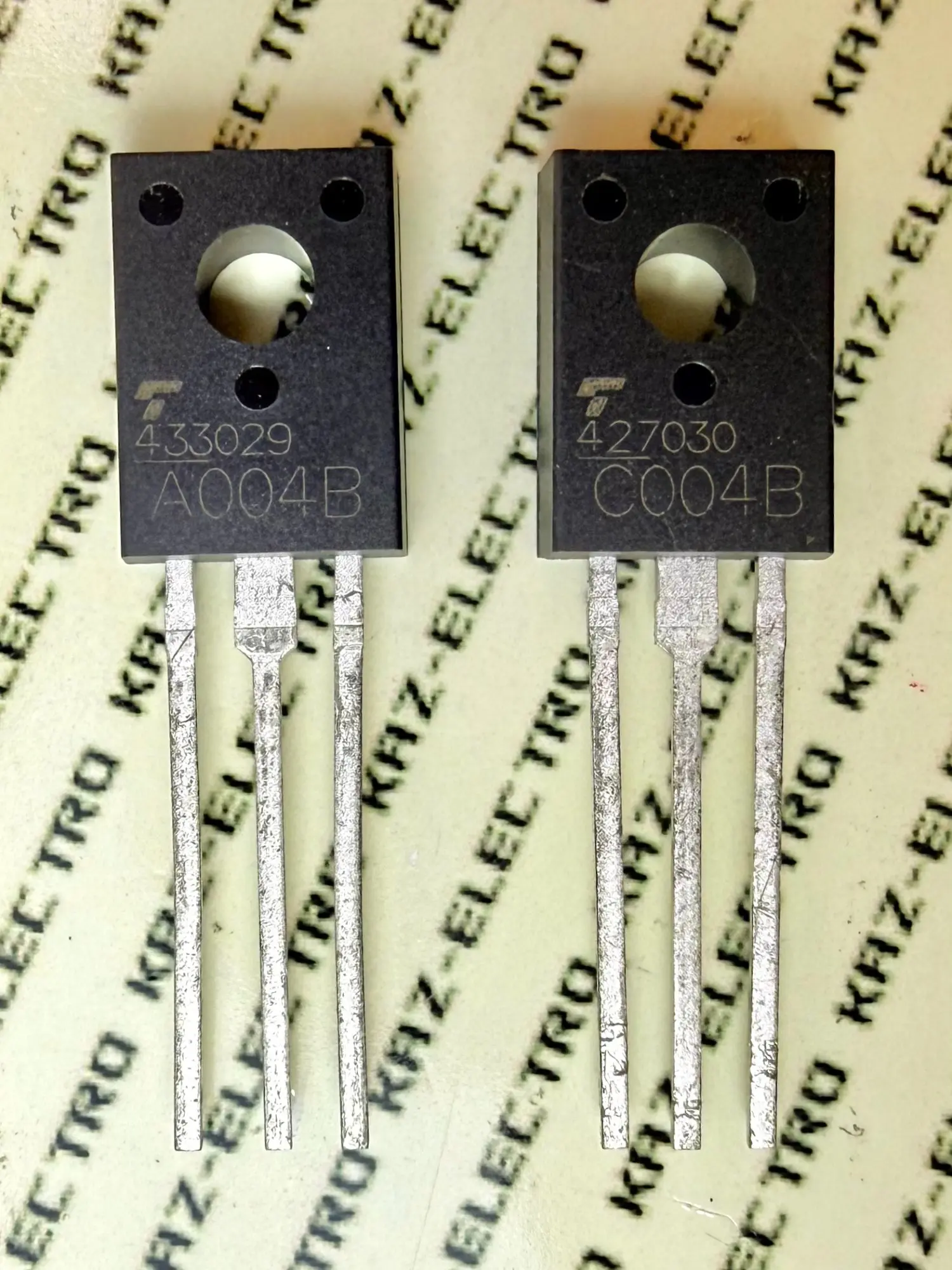
The key caveats are the TO-126N package’s non-compatible pinout and Pc=10W (at Tc=25°C). Thermal dissipation capacity differs from TO-220, so care is needed in thermal design for high-current applications.
TTA006B/TTC011B
The other option worth noting is TTA006B/TTC011B. Comparing its datasheet to the official successor 2SA1837/2SC4793 reveals closely matching ratings and electrical characteristics, suggesting these may share the same die in different packaging. Its Vceo=±230V is a strength: it covers all variants of the 2SA968/2SC2238 family, including suffix A (±180V) and suffix B (±200V). The same TO-126N pinout incompatibility applies. Photos will be added when available.
5.5 Contemporary Competitors
In the latter half of the 1970s, competition in audio semiconductor development had already reached its peak. Semiconductor manufacturers and the audio set makers that used their products were both fighting desperately not to fall behind — this was the era that produced every device introduced here. These are also families that attract counterfeit parts; the vintage audio market keeps demand alive to this day, and fake parts continue to circulate. The photographs below are of genuine specimens from this site’s collection.
Among these contemporaries, the one whose absolute maximum ratings and electrical characteristics most closely parallel those of the 2SA968/2SC2238 is Sanyo’s 2SA1011/2SC2344. With Vceo=±160V, Ic=±1.5A, and fT=100MHz, the numbers line up — it appears to have been a direct competitor targeting the same design space.
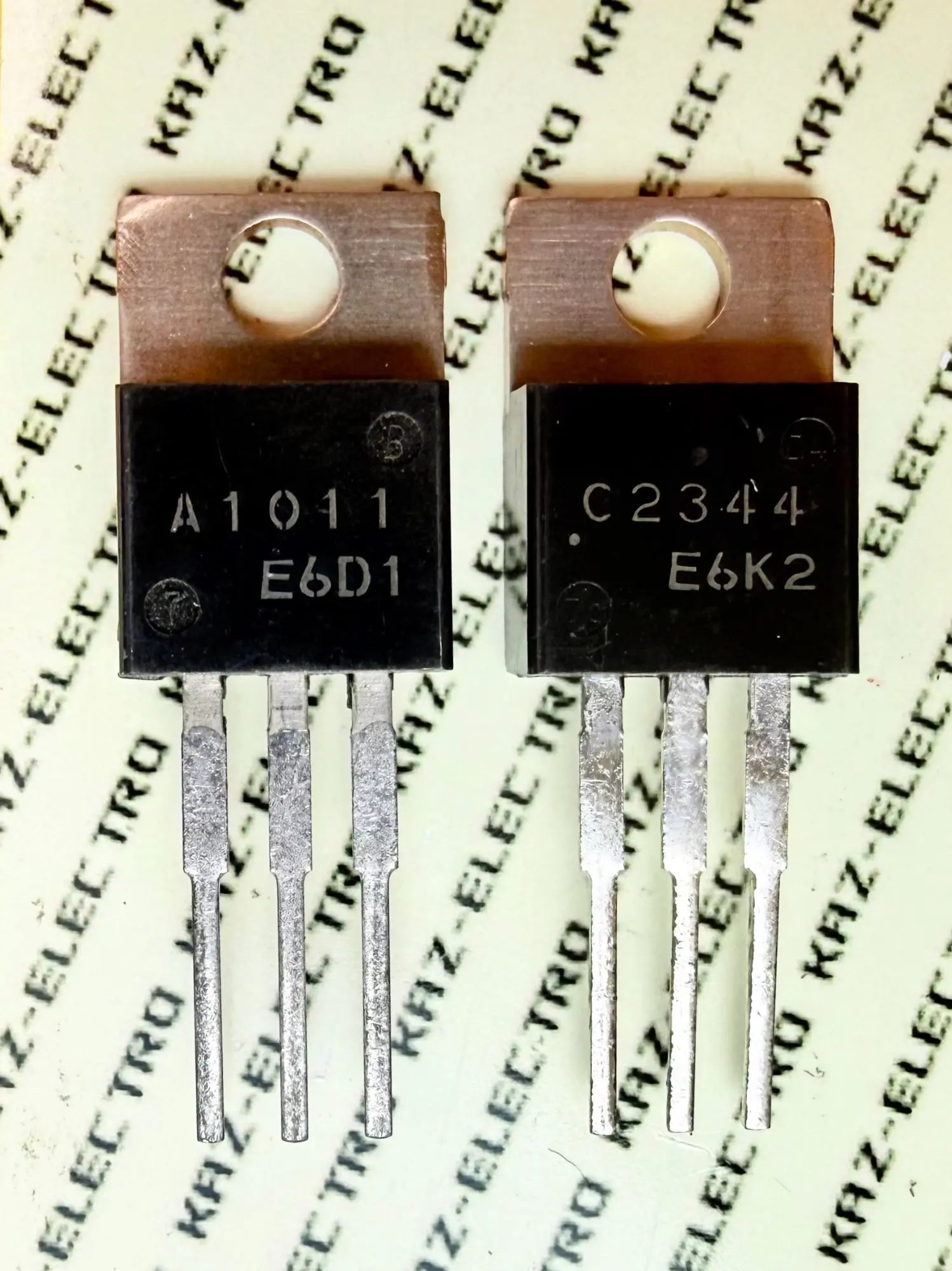
NEC’s 2SA985A/2SC2275A emphasizes high-speed performance with fT=180/200MHz. Its Vceo=±150V is somewhat lower, suggesting a design intent aimed at wide-bandwidth amplifier applications.
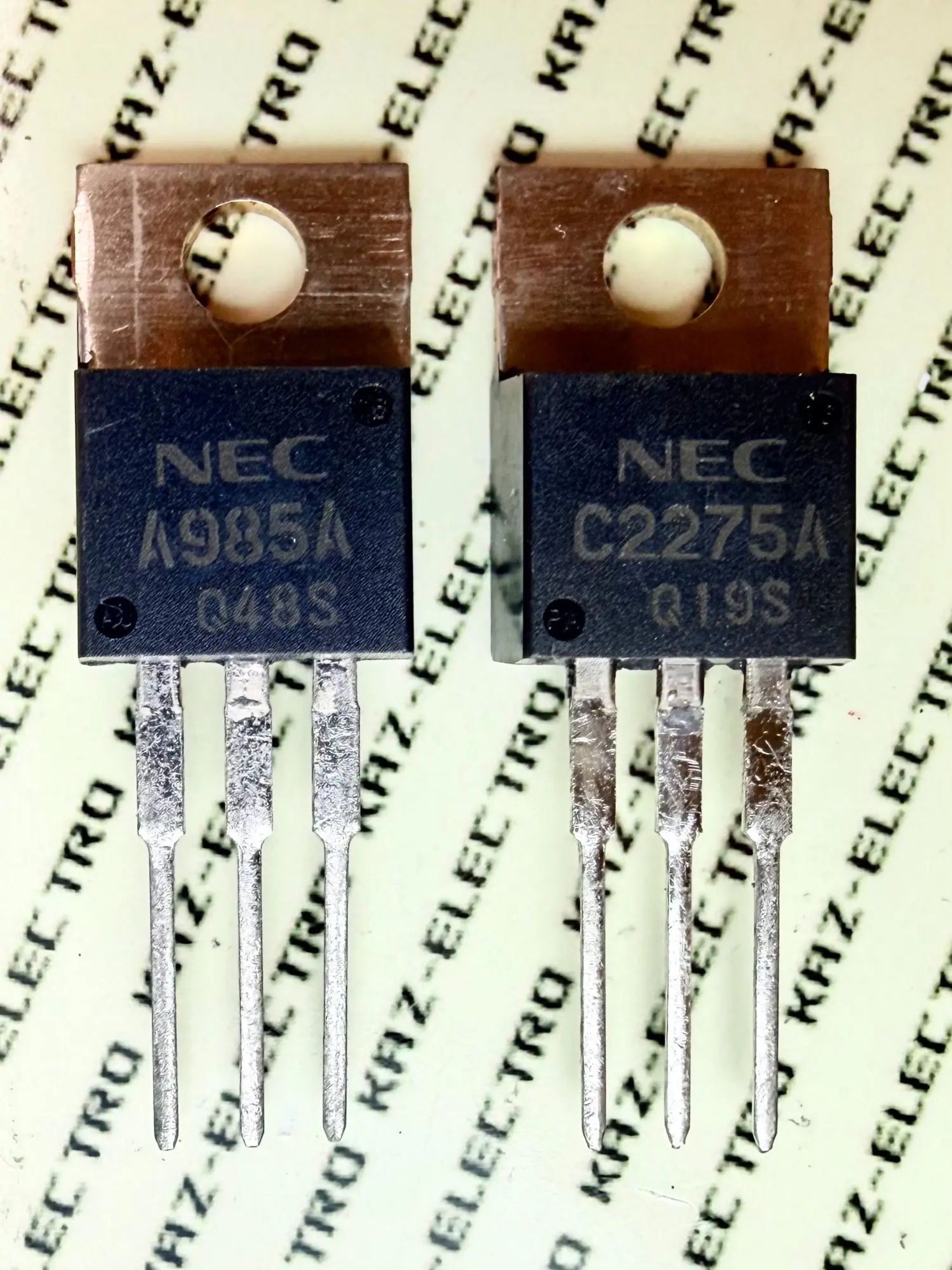
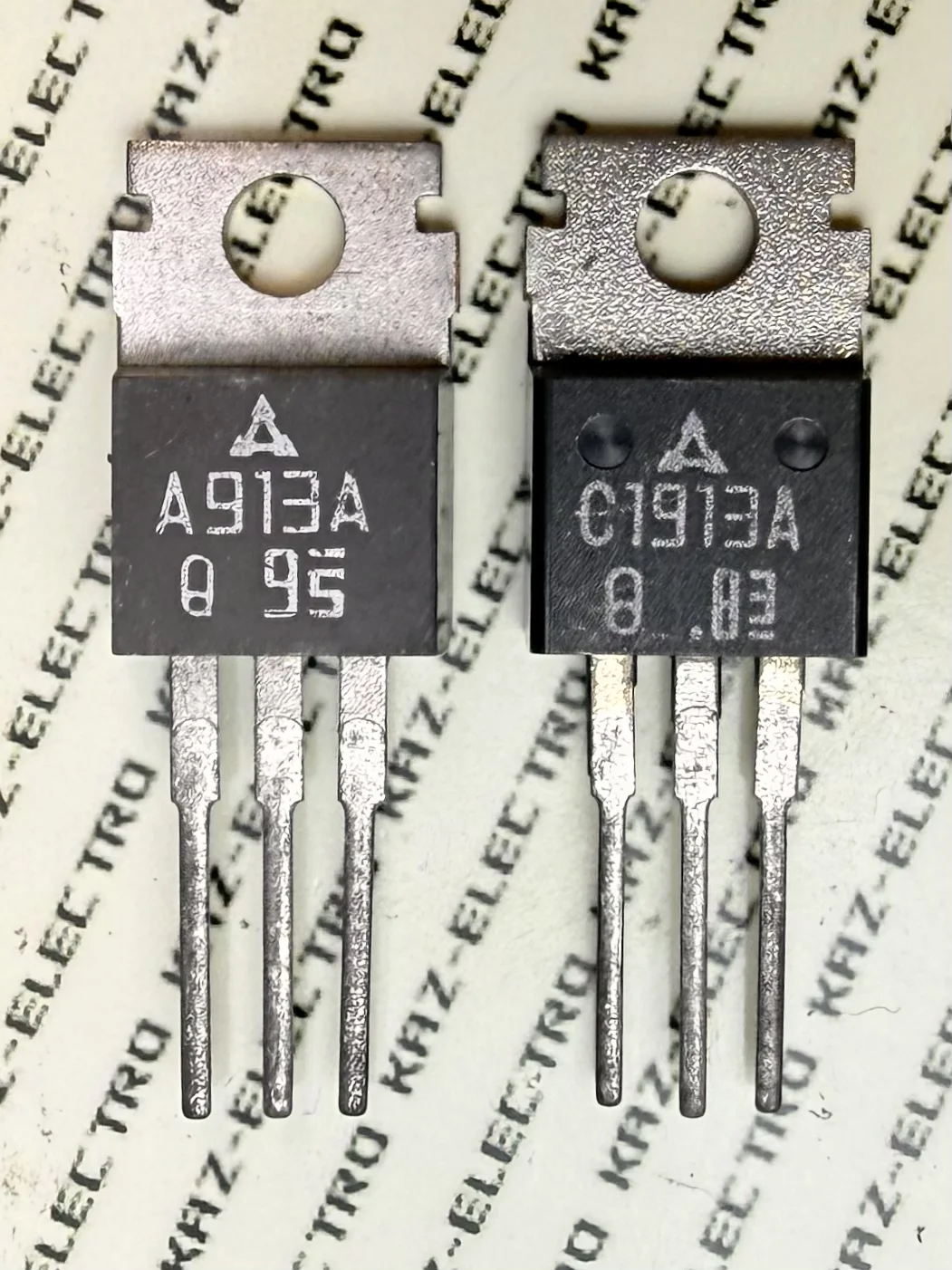
Matsushita’s 2SA913A/2SC1913A offers Vceo=±180V, Ic=±1A, and fT=120MHz.
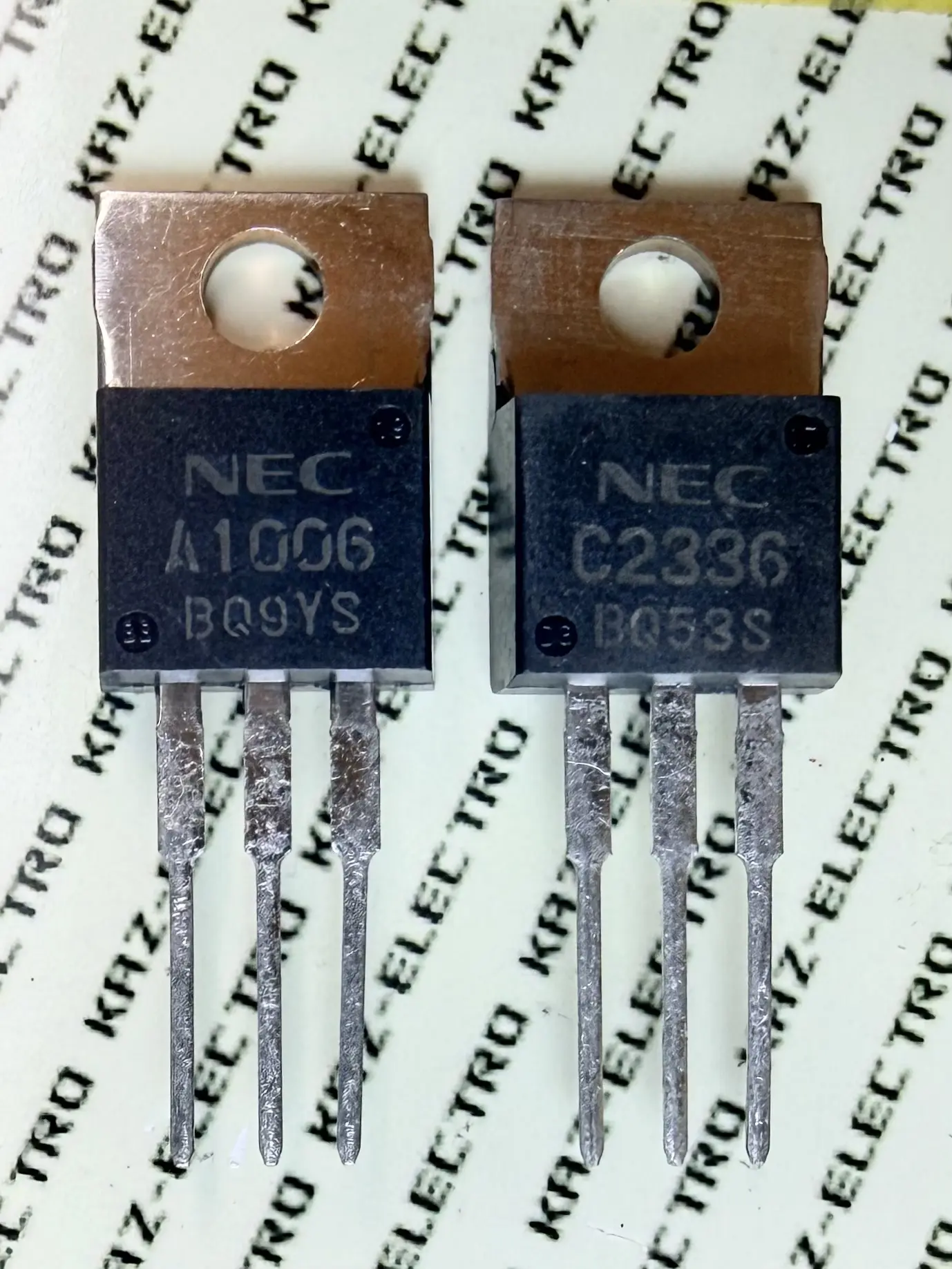
Also from NEC, the 2SA1006B/2SC2336B stands out with its Vceo=±250V while maintaining Ic=±1.5A.
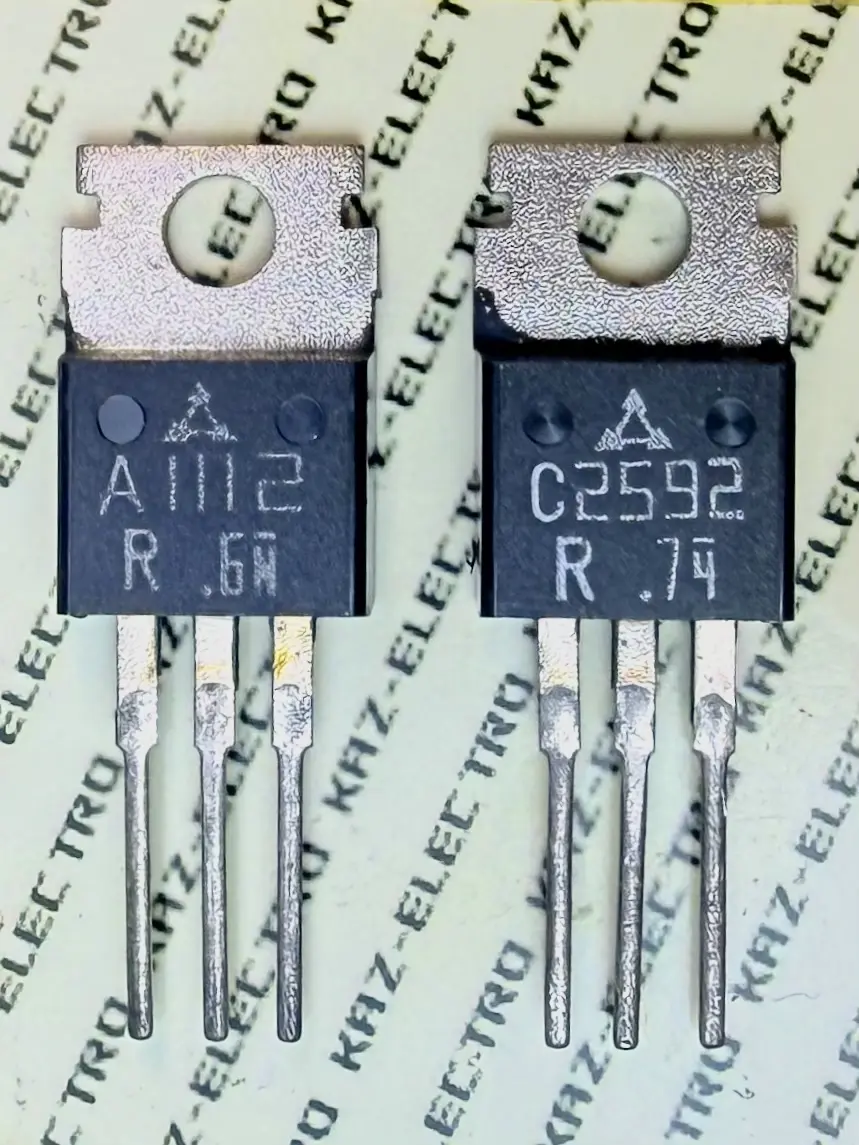
Matsushita’s 2SA1112/2SC2592 is the fastest of the group, with Vceo=±180V and fT=200/250MHz.
All of these have been discontinued for many years, and finding NOS stock may not be easy. Ironically, NOS 2SA968/2SC2238 may actually be easier to track down. For a detailed spec comparison, see the cross-reference table.
6. Gallery
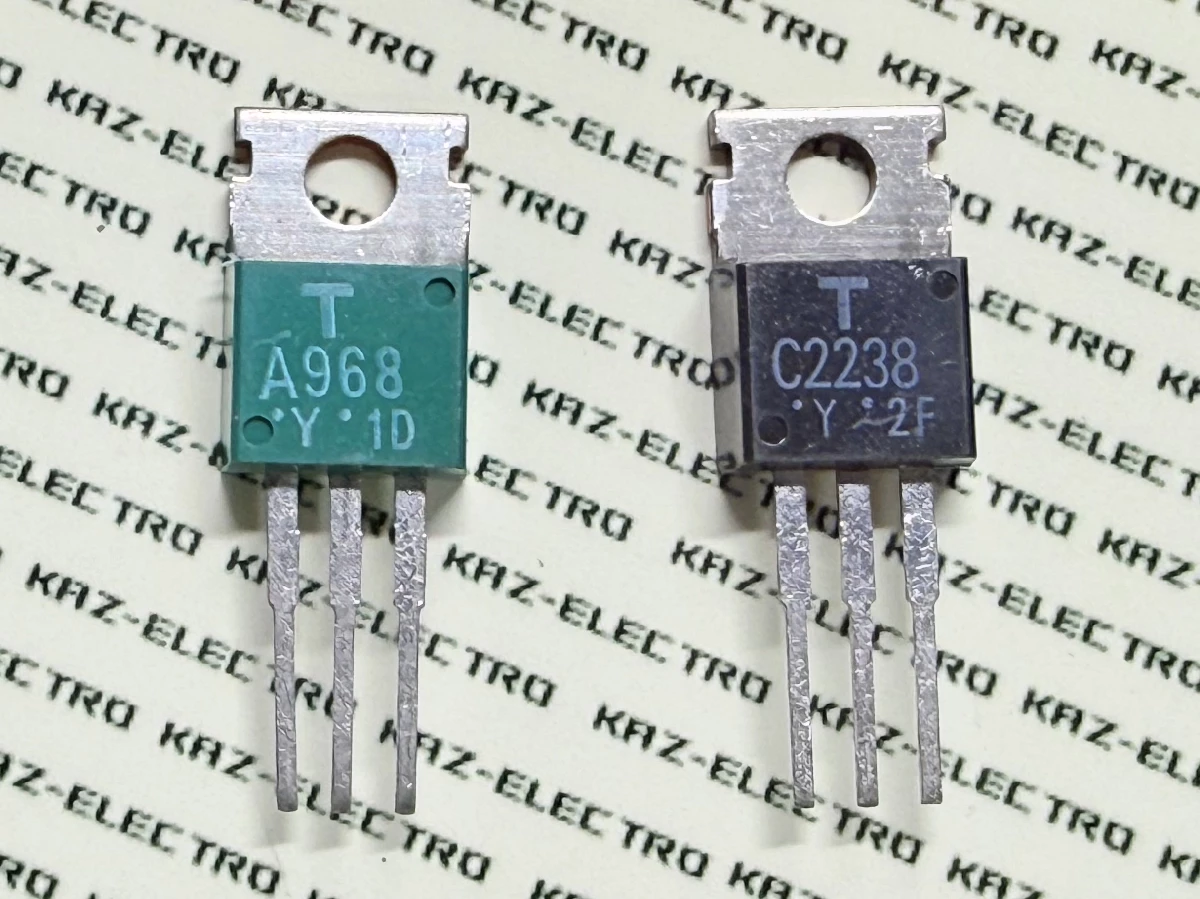
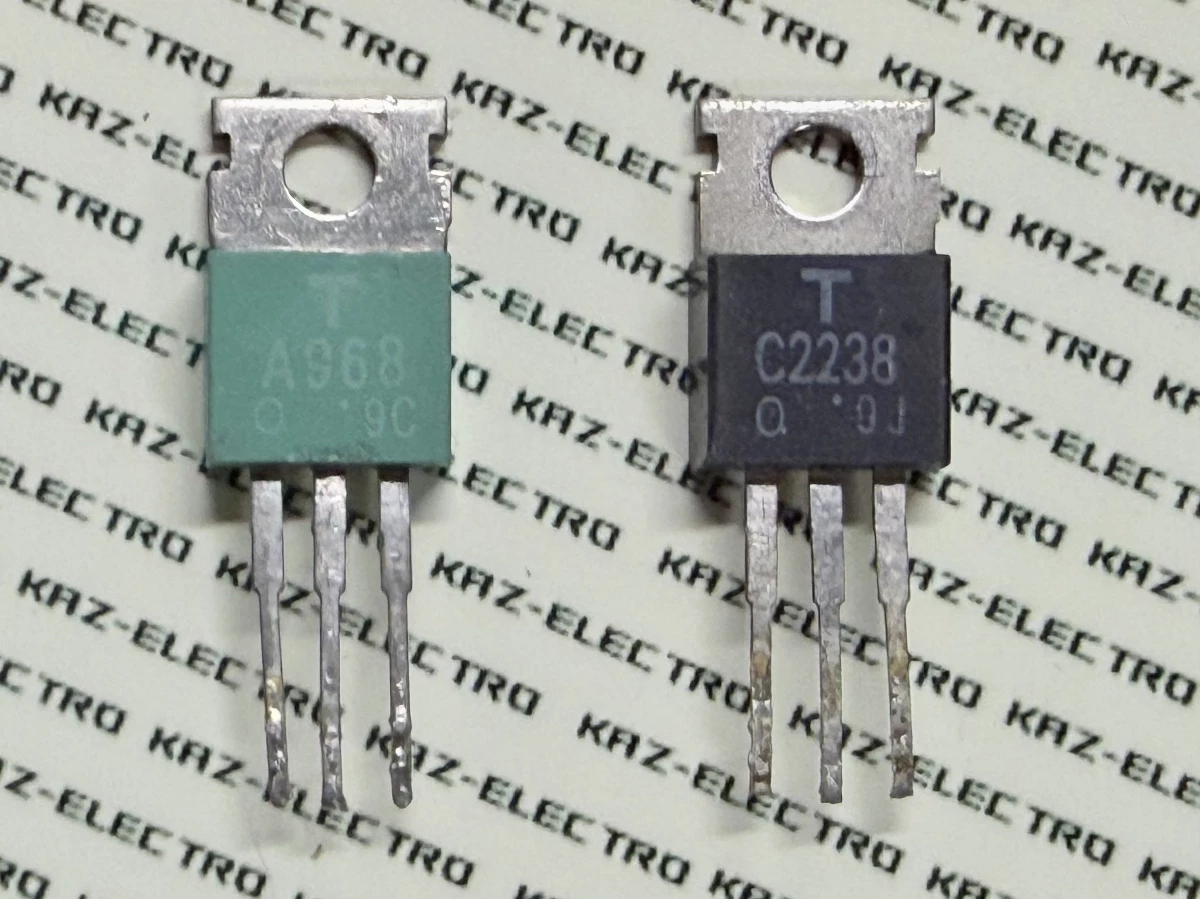
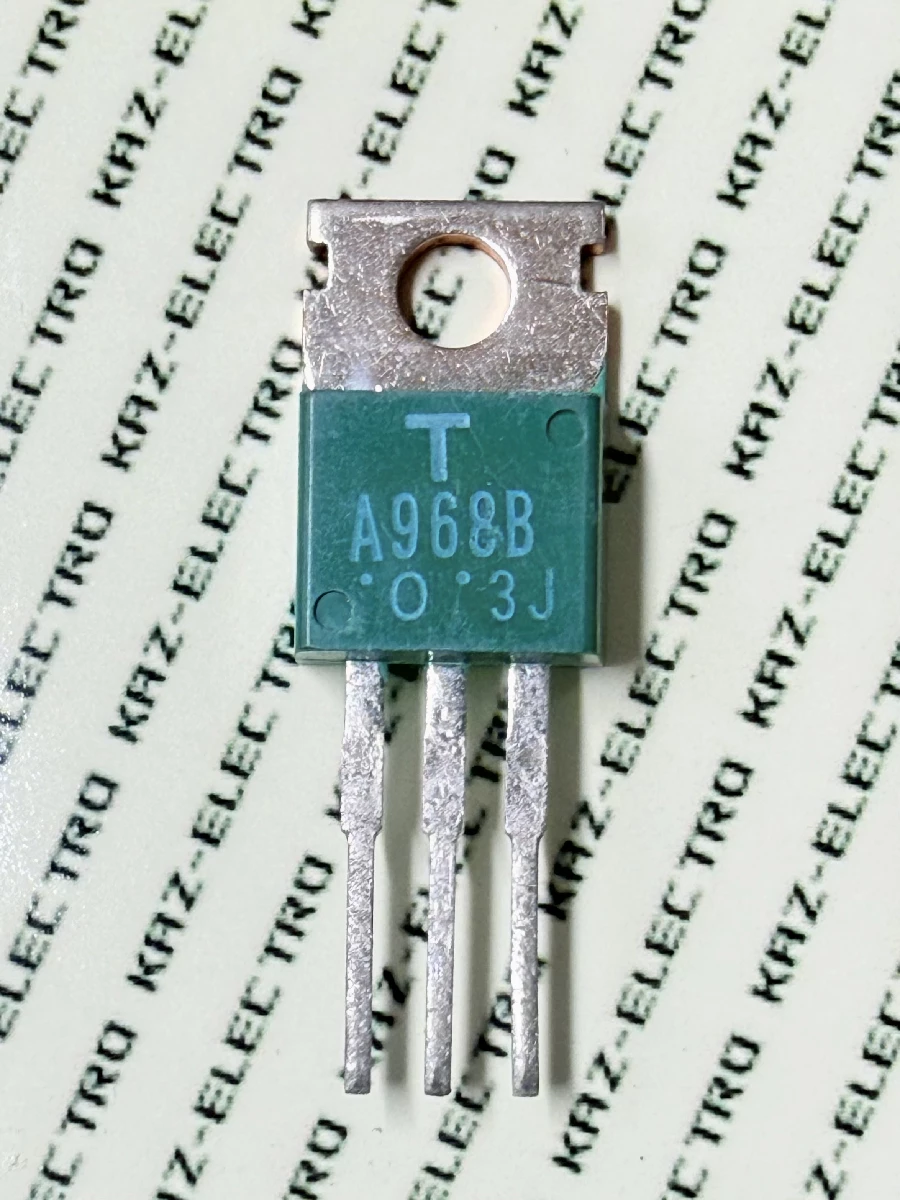
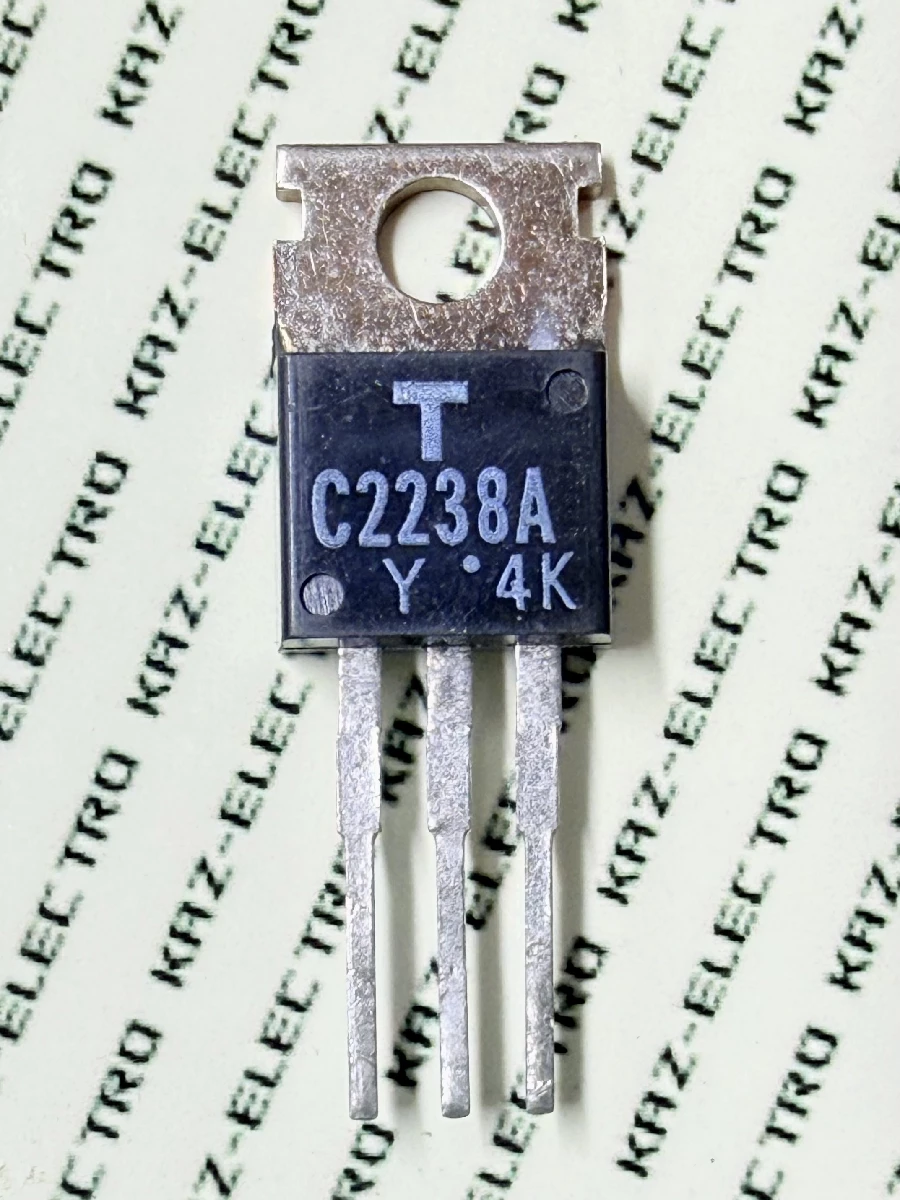
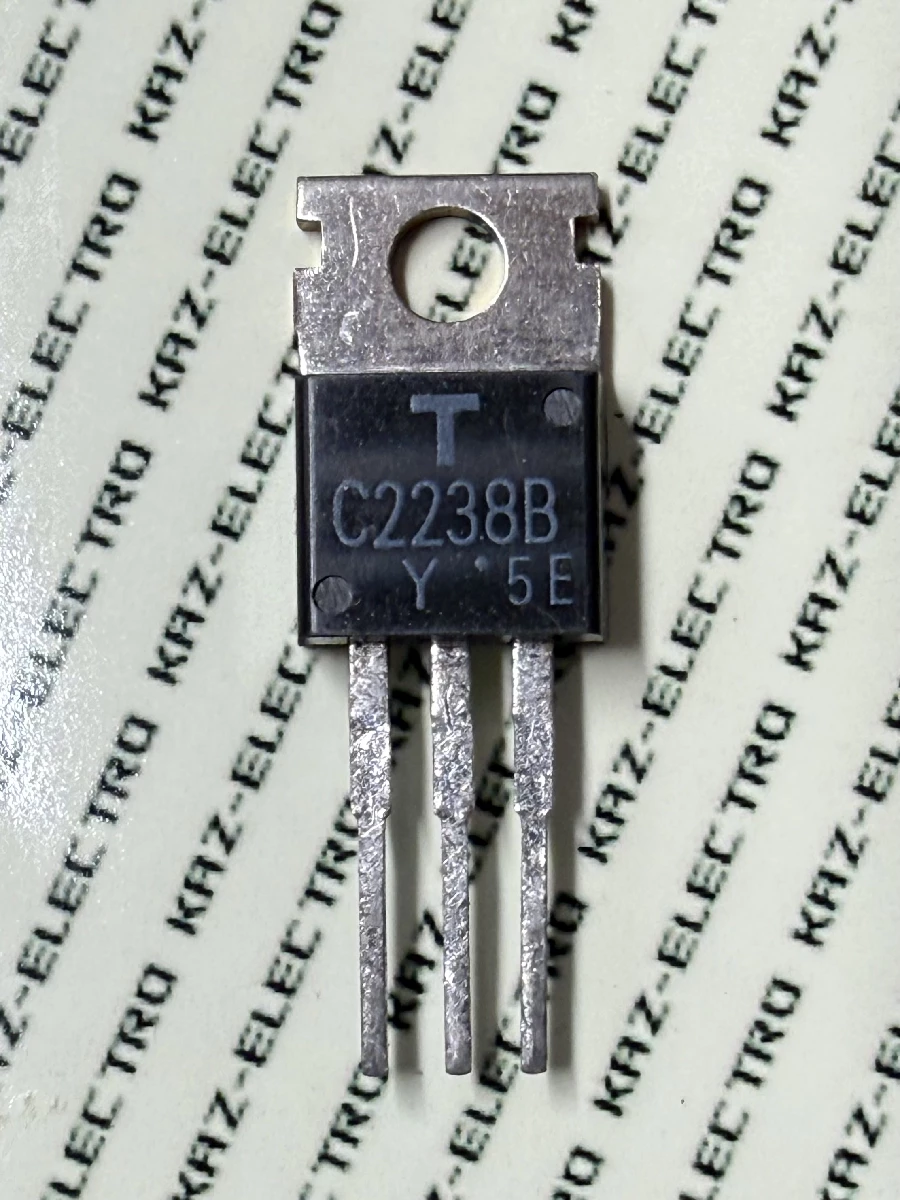
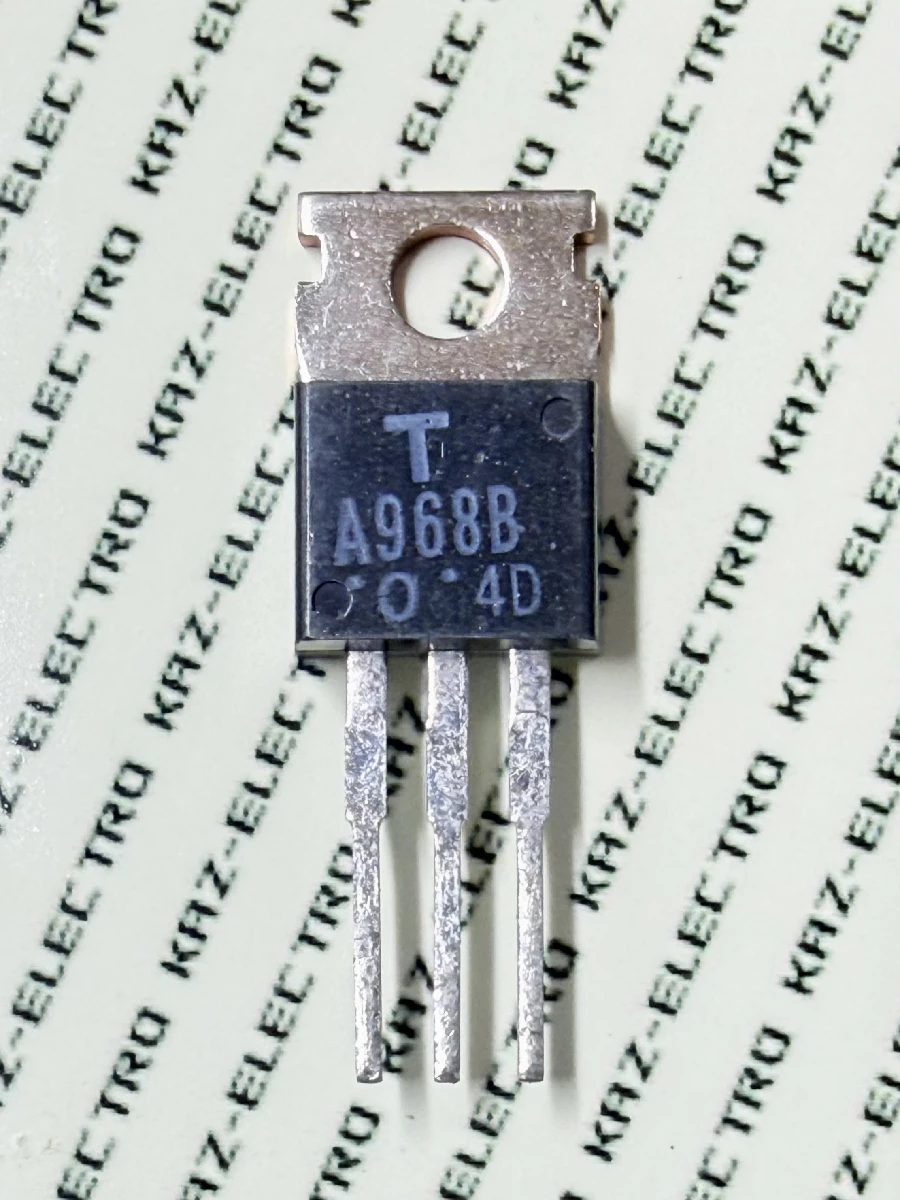
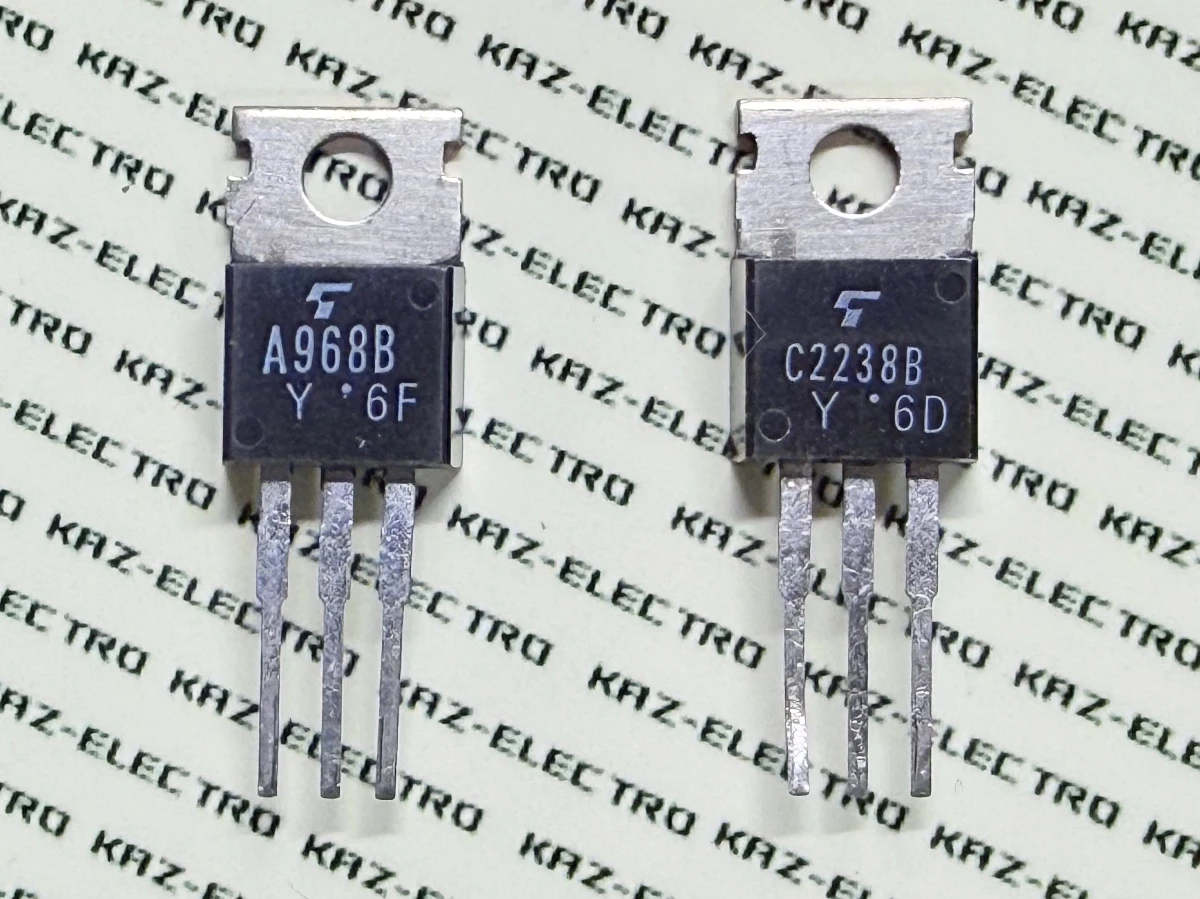
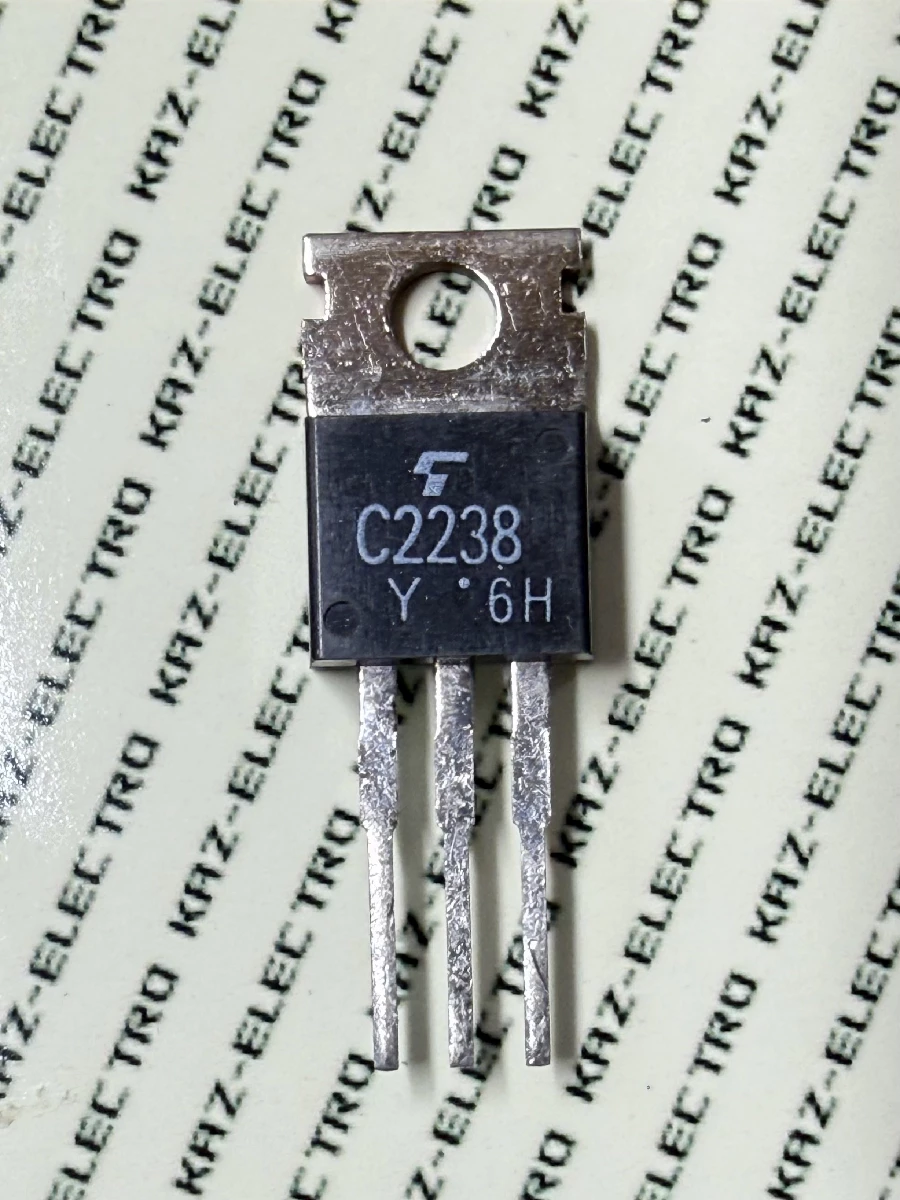
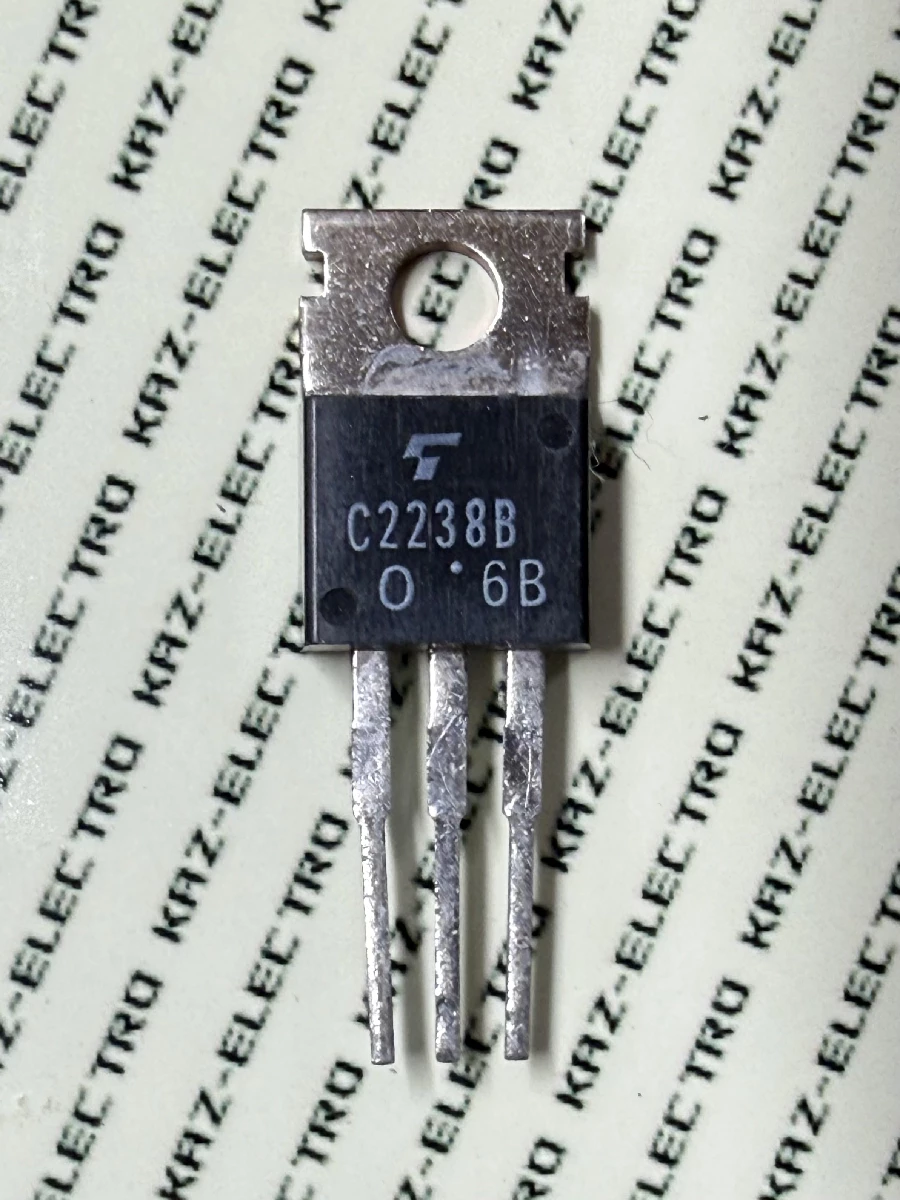
The following photographs, taken from specimens in this site’s collection, trace the visual evolution of the 2SA968/2SC2238 over approximately 18 years. Note the changes in logo design, package color, and printing style.
7. Sources and References
- TOSHIBA Semiconductor Databook 1977/1980/1983
- Toshiba “Semiconductor Product Overview” (半導体製品総覧表) 1982/1988
- TOSHIBA “Power Transistor Databook” (パワートランジスタデータブック) 1990/1999
- SONY Semiconductor Handbook 1979
- SONY “Semiconductor Replacement Handbook” (ソニー補修用半導体ハンドブック) 1981/1982/1994
- CQ Publishing “Transistor Specifications” (最新トランジスタ規格表) 1976–2014
- CQ Publishing “Transistor Cross-Reference” (最新トランジスタ互換表) 1977–2003
- HITACHI ’79 SEMICONDUCTOR DATA BOOK Transistors & Diodes (トランジスタ・ダイオード)
- HITACHI ’96 Bipolar Power Transistors (日立バイポーラパワートランジスタ)
- NEC ’84 Electronic Device Databook — Transistor Volume (電子デバイスデータブック トランジスタ編)
- PANASONIC ’83 National Semiconductor Handbook (ナショナル半導体ハンドブック)
- SANYO ’87-88 Semiconductor Databook — Discrete Transistor Volume (半導体データブック 個別半導体素子トランジスタ編)
For details, see Reference Materials.
