Why This Archive Exists
The “Information Valley” I Encountered
I am currently organizing transistor information spanning the 1950s through the 2010s. In the course of this work, I hit a wall.
Data from before 1980 is, surprisingly, relatively easy to find.
- Printed databooks still exist.
- Libraries retain paper copies.
- Analog media physically survived.
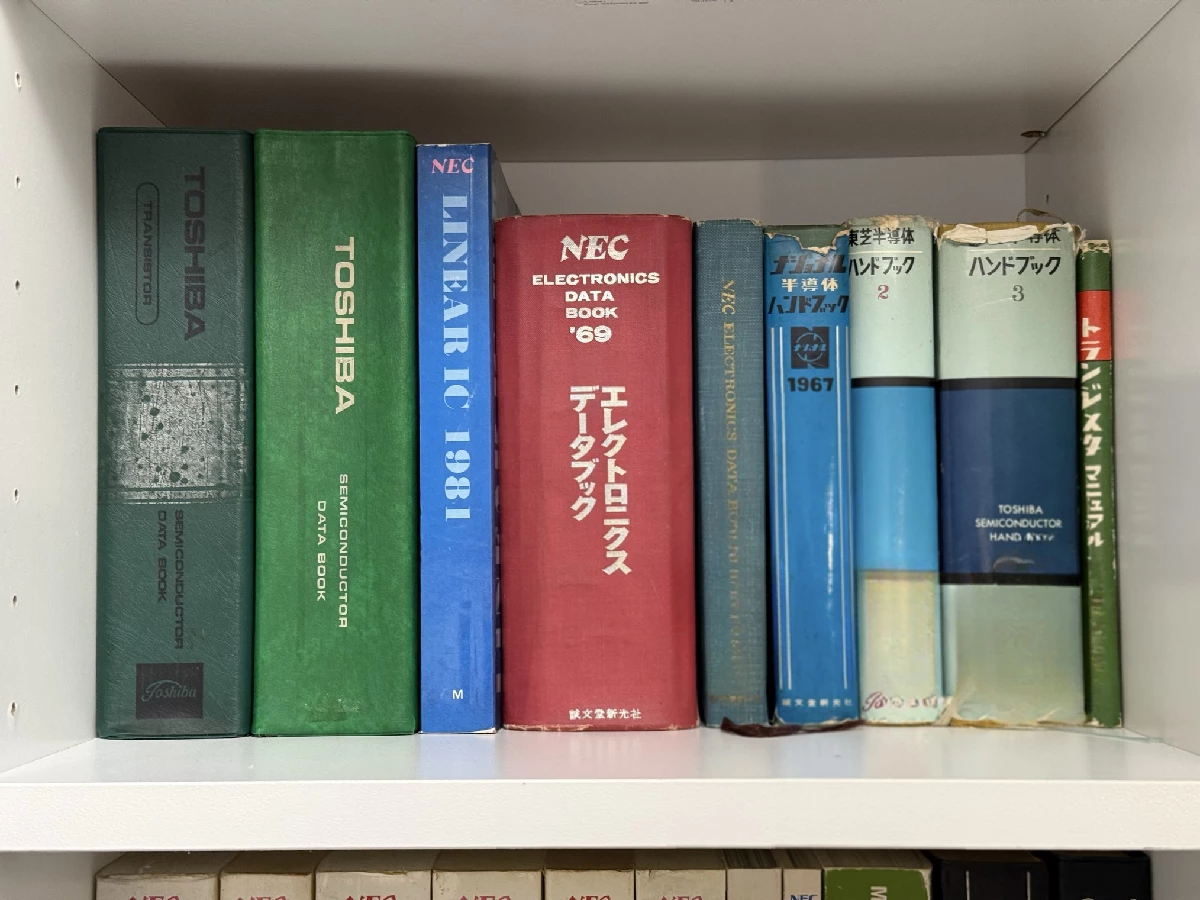
However, information from the 1990s through around 2010 is extremely difficult to collect.
One might expect that “digital-era” information would be the easiest to recover. In reality, this period is the most fragmented, the most lost.
- Recording media degraded.
- Manufacturers’ websites were restructured or shut down.
- CD-Rs and MO disks became unreadable.
- Personal homepages vanished with the shutdown of services like GeoCities.
- Print publications shrank or ceased, cutting off printed records.
After around 2013, the situation improved again.
- Cloud storage became widespread.
- PDF distribution became the default.
- Projects like the Internet Archive began preserving copies.
In other words, the period from the 1990s through around 2010 is an “information valley.”
And this valley is not something only I have experienced. Across many fields, many people have noticed the same pattern.
Why Only This Era Disappeared
1. Media Died Far Sooner Than Expected
The primary recording media from roughly 1995 to 2010 had far shorter real-world lifespans than their rated specifications suggested.
| Media (1995–2010s) | Rated Lifespan (Catalog Spec) | Commonly Observed Lifespan |
|---|---|---|
| CD-R | “Up to 100 years” | Often unreadable within 5–15 years |
| DVD-R | “30-year class” | Media may survive, but drives have disappeared |
| ZIP / JAZ | “High reliability” | Frequent media failures and drive breakdowns |
| HDD | High MTBF on paper | Crashes within 5–8 years not uncommon |
I myself experienced CD-Rs containing PDF scans of databooks becoming unreadable. In the end, I had to search auctions to buy back the paper databooks. These databooks were often not commercially available to begin with, making them inherently difficult to obtain. The fact that even the National Diet Library rarely holds them underscores how serious the situation is.
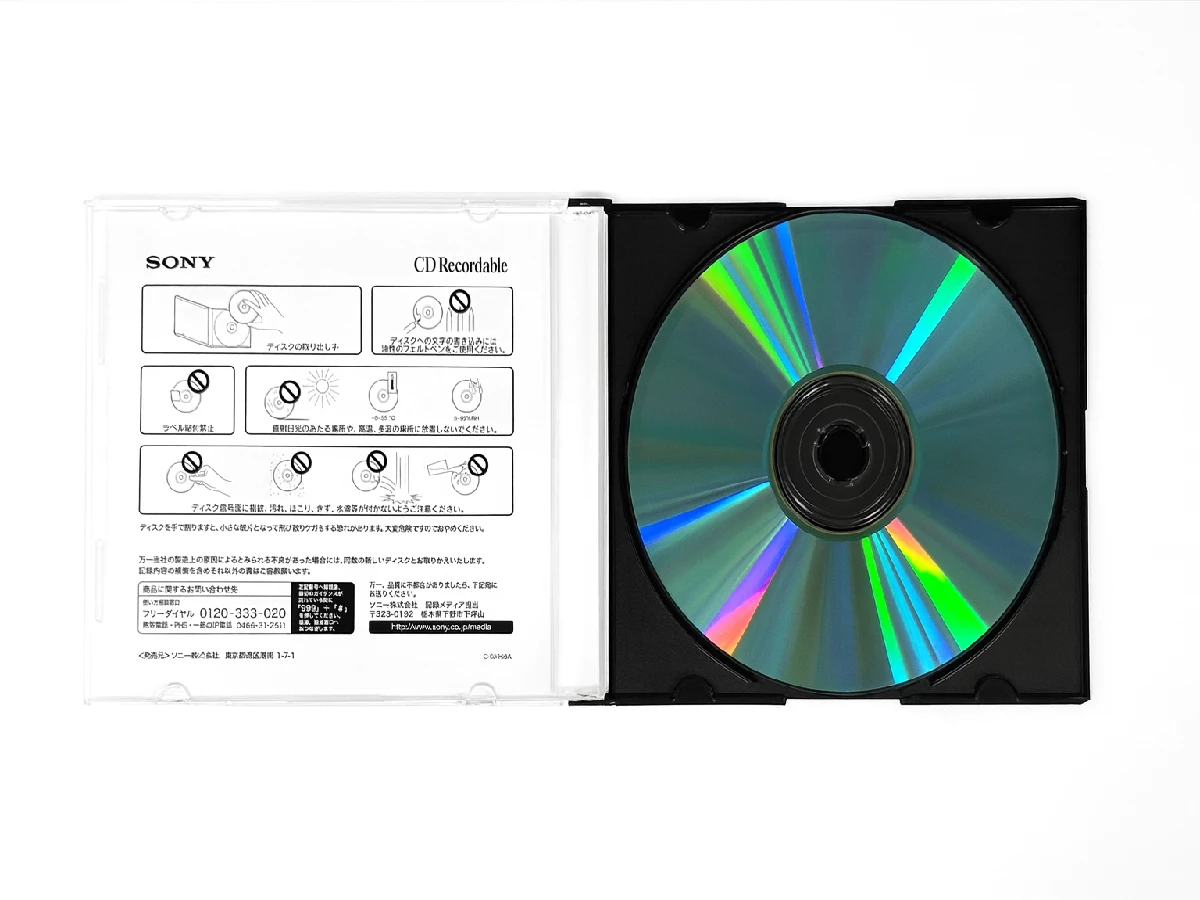
The media itself betrayed our expectations.
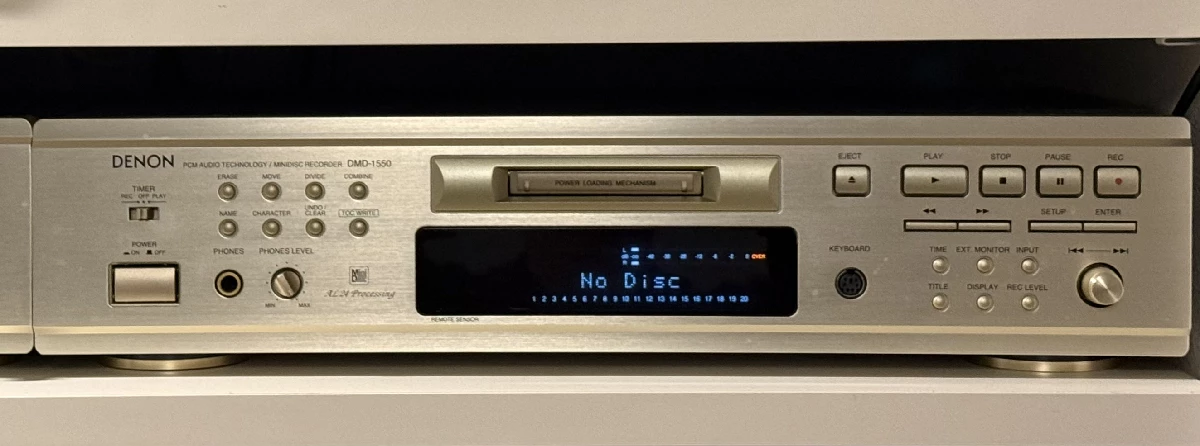
My MD deck still works, miraculously. I even secured an expensive spare pickup lens, intending to use it for twenty years. But the recording media itself vanished from the market. No matter how well-prepared the hardware side may be, if the media is unobtainable, it is all for nothing.
2. Formats Outlived Their Machines
Even where disks or tapes survive, the hardware to read them does not. This is the more serious problem. Precious data sits right in front of you, yet you cannot reach it.
- MiniDV / DVCAM / Hi8 / DAT
- SmartMedia / xD-Picture Card
- SCSI HDD
- 3.5-inch and 5-inch floppy disks
- Cartridge-type DVD-RAM
I still have unopened Hi8 tapes. I had bought them in bulk, expecting long-term use. The manufacturer’s claim of “stable image quality for long-term storage” may well be true.
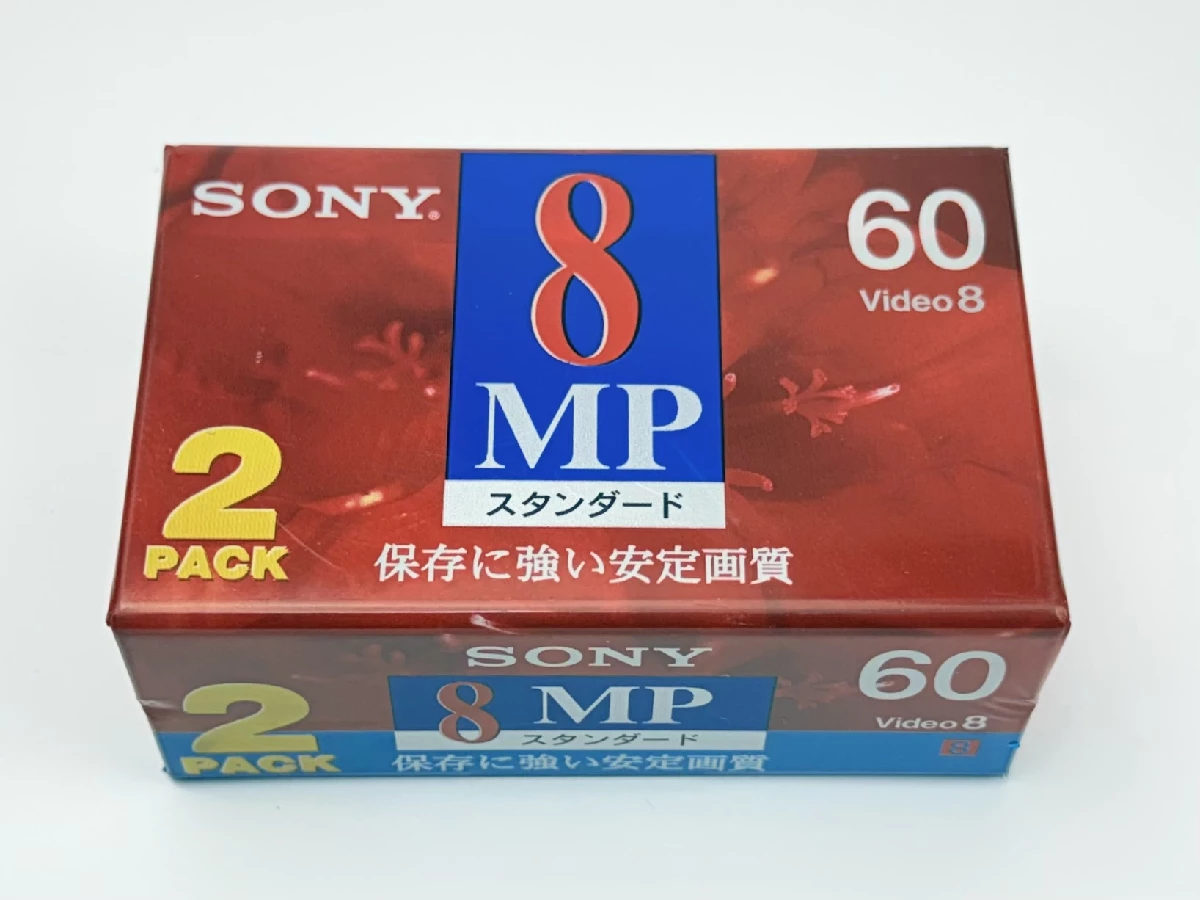
Be that as it may, I have dozens of irreplaceable tapes — live recordings from my student days and the like. The deck eventually broke down, and I had to buy a replacement at auction. Even that will be finished once the head wears out.
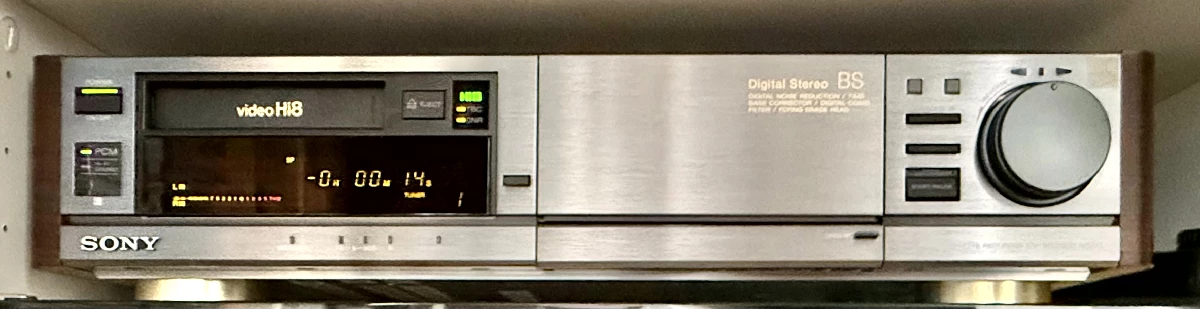
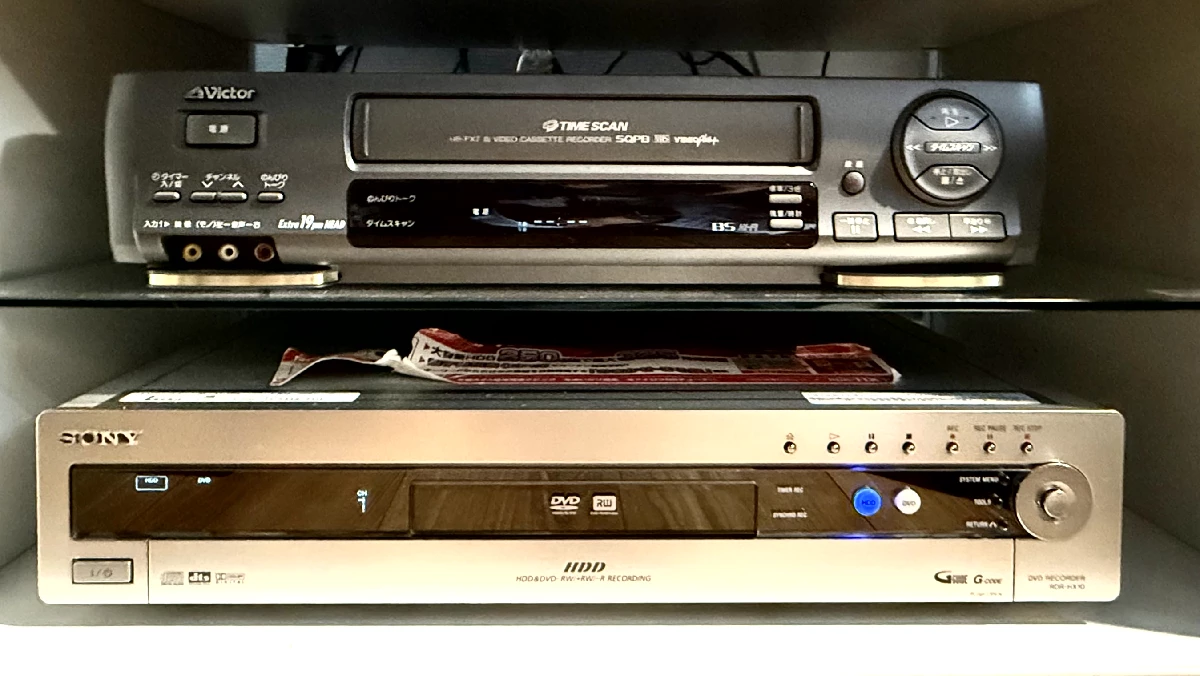
I had backed up some tapes to a DVD/HDD recorder in the past, but the DVD recorder no longer works. Worse, it is an older model with analog output only. Despite the data being digital, extracting it is a struggle.
The same goes for VHS tapes, which are analog data. I was in the middle of backing them up to the DVD recorder when the VHS deck gave out.
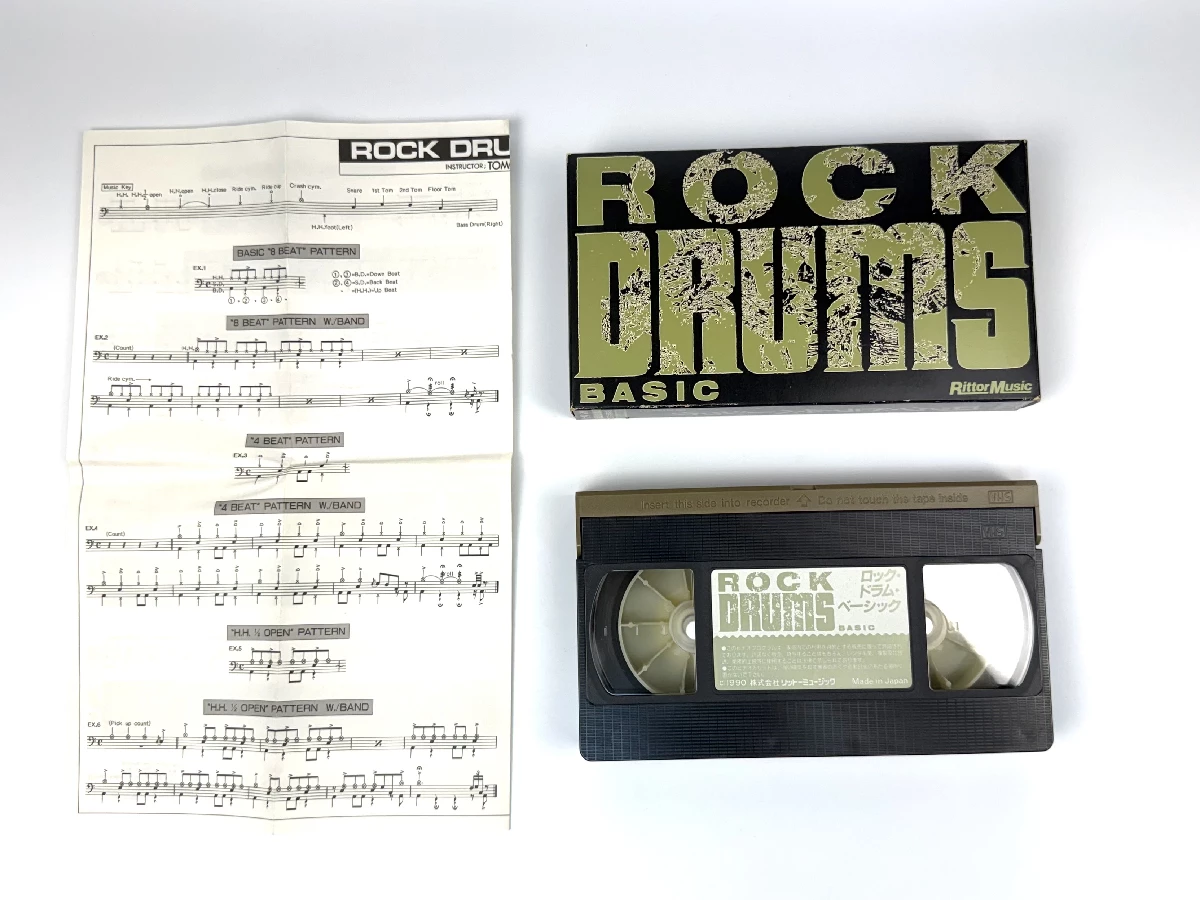
It is not just video. The same thing has happened in the world of entertainment.
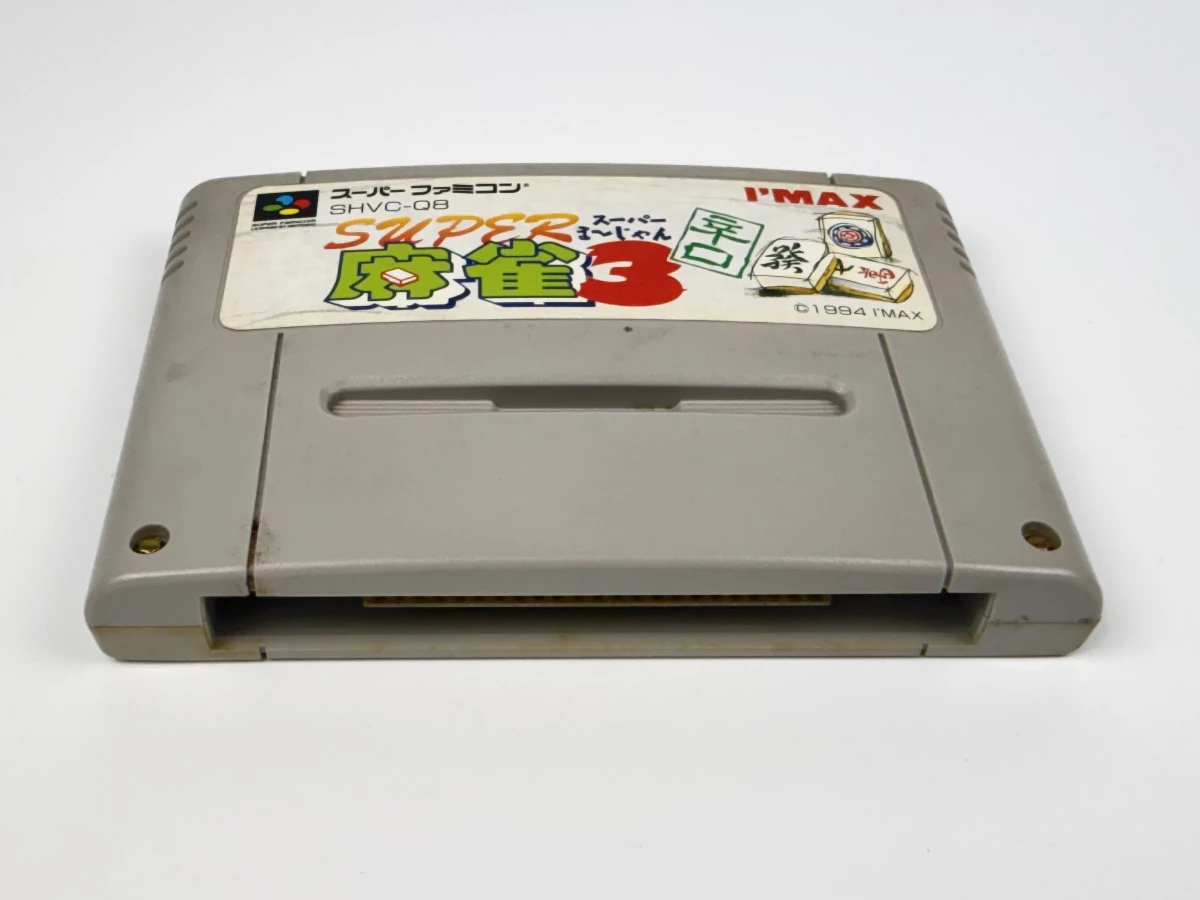
Game console ROM cartridges. The data is burned into semiconductor chips, so there is no tape- or disk-type degradation. But the consoles break, video output standards change, and the TVs capable of connecting to them are vanishing.
Personal computers are no exception. I have been building my own machines since the days of Windows 95 — roughly thirty years of consistently choosing the freedom of custom-built PCs.
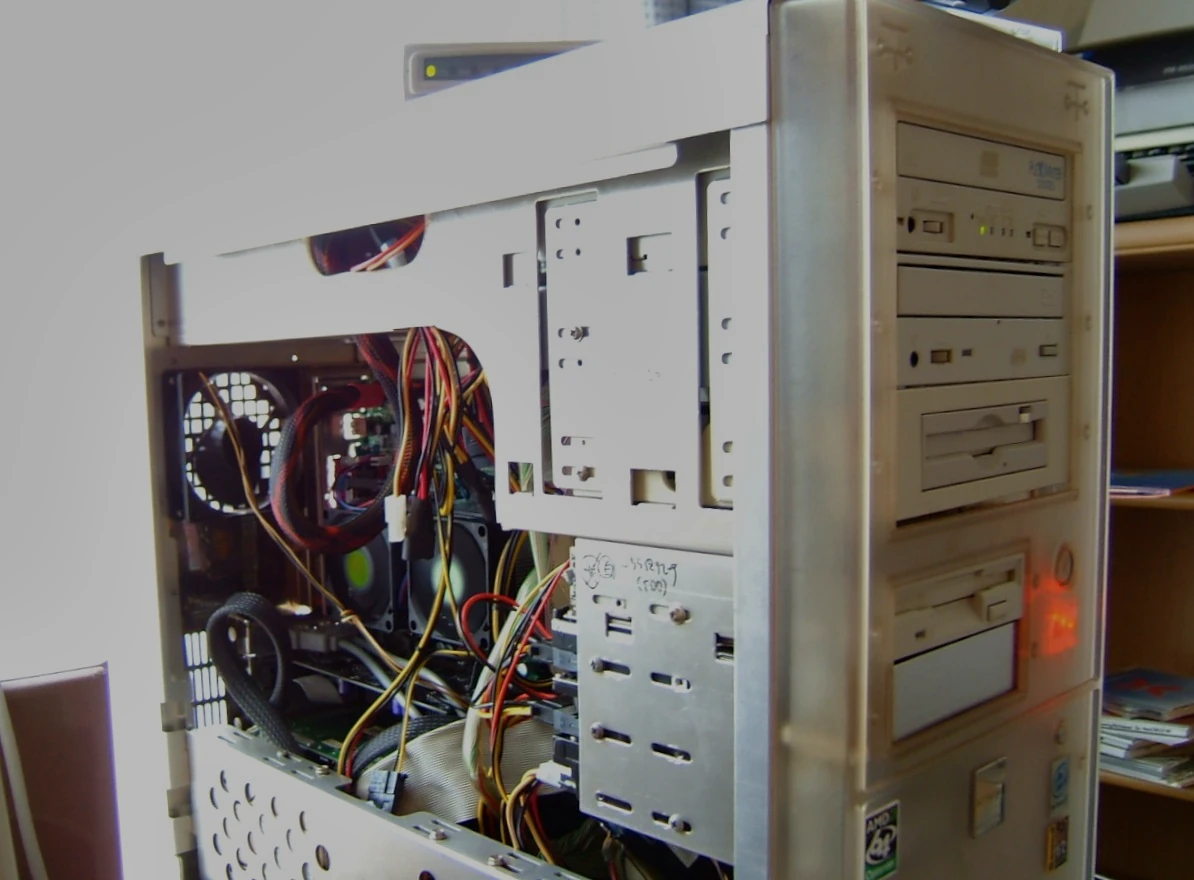
Around the time Windows 2000 came out, I went all-SCSI, prioritizing speed and reliability. But SCSI interfaces soon fell into decline, and I reverted to IDE. The investment was wasted. If neither drives nor interfaces are available, even if the media sits in a drawer, the data is effectively gone.
Video tapes, game ROM cartridges, SCSI drives on PCs. The media and data may remain in hand, yet the means to read them vanish one after another.
3. File Formats Were Born and Died
The period around 2000 was a chaotic era before “standards” had settled.
Formats already lost or disappearing:
- WordPerfect, Lotus 1-2-3 documents
- RealAudio / RealVideo
- DivX 3 / Indeo codecs
- Flash / Shockwave content
- Proprietary RAW formats from early digital cameras
- Proprietary project formats from music production software
The files may still exist. But the software is gone.
A file that has lost its software is effectively dead data.
SPICE simulator software. It runs on PC-DOS or MS-DOS. But there are no floppy drives, no DOS environments. It was unstable unless run in a native DOS environment. This is a rare version that includes SPICE model extraction software. I once had a DOS emulator for Windows, but the emulator itself could not keep up with OS updates and became useless.
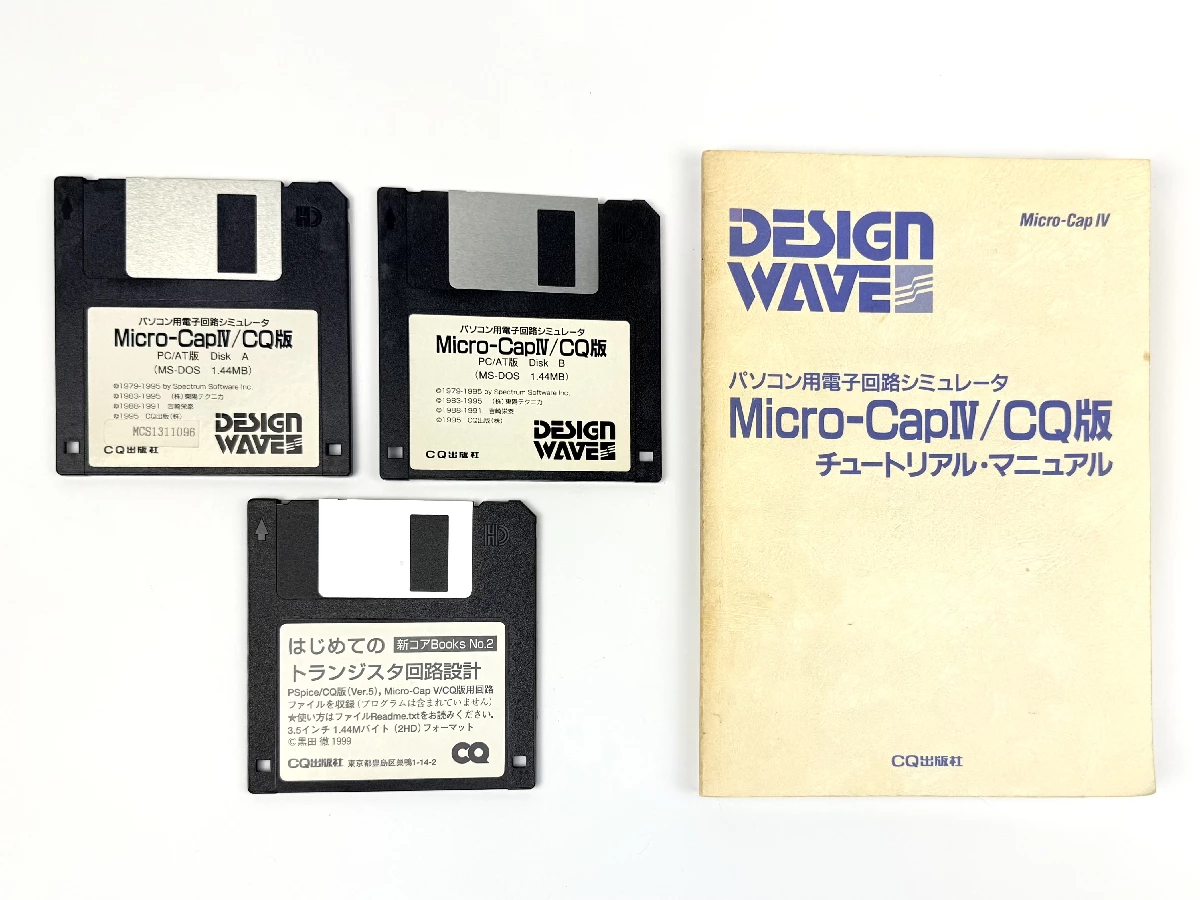
Software discontinuity can occur even when hardware is intact.
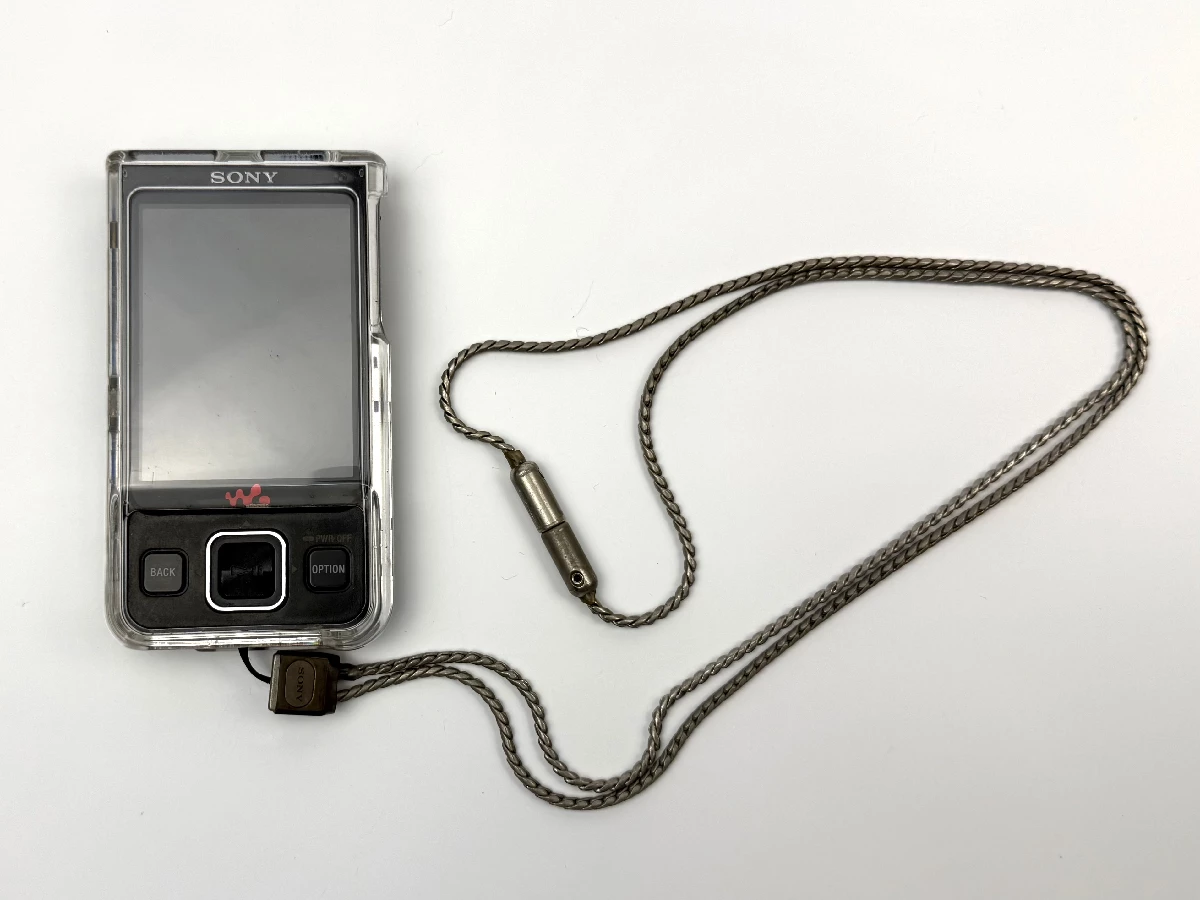
My Sony Network Walkman (flash memory type) held a library of 200 CDs transferred from a PC. A factory reset wiped all data. Restoring it requires Windows XP and SonicStage, neither of which is usable anymore. The hardware is in my hands; the original CDs are here too. But the means to connect them is gone. Copyright protection technology (MagicGate), a proprietary format (ATRAC), and dedicated transfer software (SonicStage) — this triple lock makes data recovery effectively impossible.
Then in the 2020s, yet another kind of discontinuity emerged.
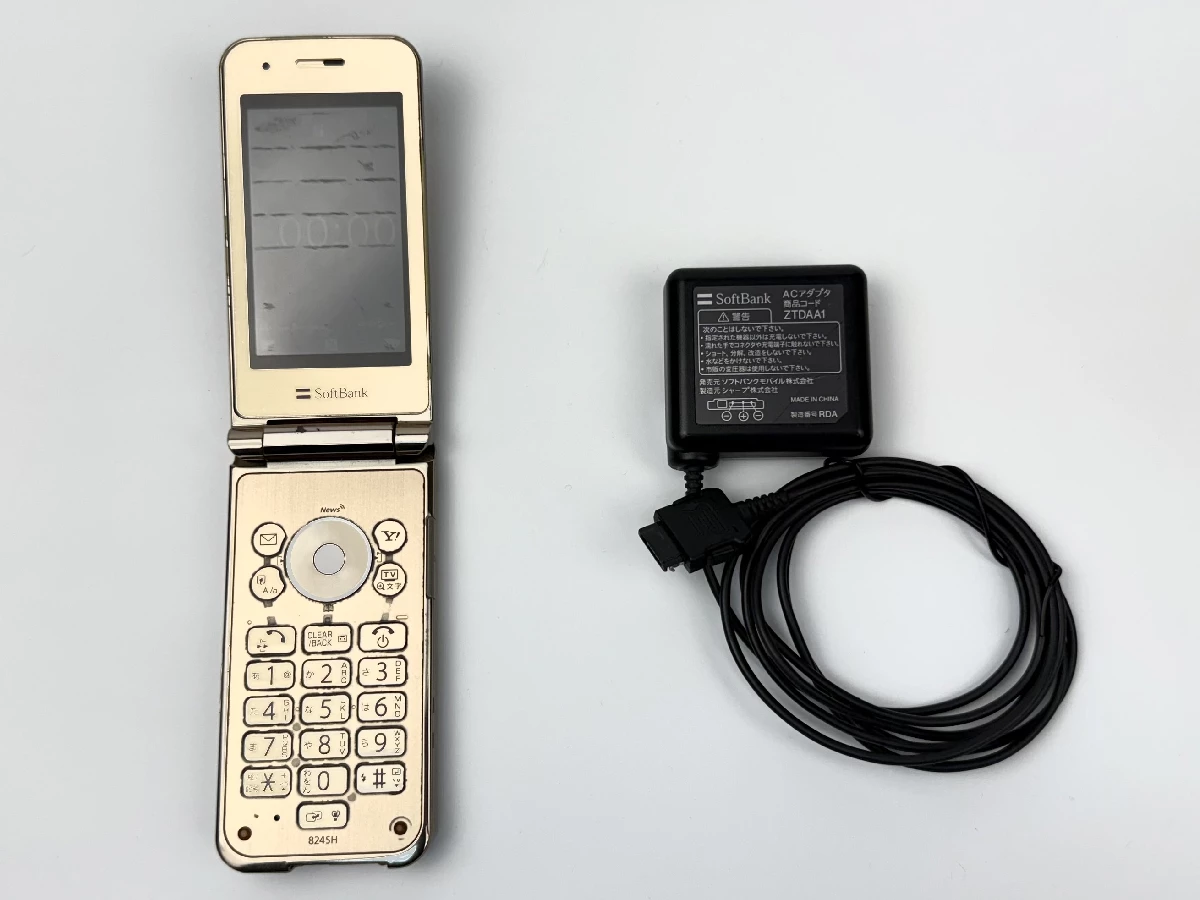
Hardware and media are both alive, yet the network infrastructure itself is shut down. With the termination of 3G service, a fully functional flip phone became a brick overnight. Not the death of a machine, not the death of media, not the death of software. The death of infrastructure.
In recent years, I have stopped using my digital camera entirely. The iPhone, a multi-purpose machine, has swallowed everything. Yet ironically, it is the iPhone that made cloud backup and digitization part of daily life. Since 2013, the environment for preserving information has improved dramatically.
But that does not recover what was lost between the 1990s and the 2010s.
4. The Cloud Did Not Yet Exist
Things that feel “normal” in the 2020s:
- Google Drive
- Dropbox
- iCloud
- GitHub
- Home NAS with RAID
Not a single one of these was available to the average user around 2000.
- There was no widespread backup culture.
- Almost nobody kept offsite copies.
All data resided in:
- A single PC at home
- A handful of optical discs
In practical terms, that meant:
One PC failure = life-scale data loss.
This is not someone else’s story. A colleague of mine lost five years of family photos when a PC hard drive failed. They were precious photos from around the time his child was born. I still remember how chilling it was to hear.
5. The Illusion of “Digital Is Forever”
For the generation that grew up with analog media, there was a natural sense that “things degrade, so you must preserve them.”
But in the early phase of the digital transition, many people thought:
Digital = no degradation → no need to worry
As a result, an enormous amount of digital culture was lost.
- Family photos and videos
- First personal homepages
- Bulletin boards and early blogs
- Personal creative works
- University and lab data
- Corporate CAD files and documents
The 1990s and 2000s were:
- Less durable than analog
- Less safe than today’s cloud era
In hindsight, that era was the most dangerous transition period for data.
This data loss is a historical phenomenon.
And it is not a thing of the past.
A few years ago, my company PC was migrated from HDD to SSD. Within six months, the data was gone. Because it is semiconductor memory, recovery was effectively impossible. With an HDD, there is at least a chance of physically reading data from the platters. An SSD offers no such option. Six months of data that I had neglected to back up was wiped out entirely. It was not a fatal blow, but the lingering regret of “if only I still had that data, I wouldn’t have to redo these materials” has never fully faded.
SD memory cards are the same story. After my DAT recorder died, I switched to a ZOOM SD memory recorder, but it loses data with alarming frequency. USB flash drives are no different — once the data is gone, there is nothing you can do.
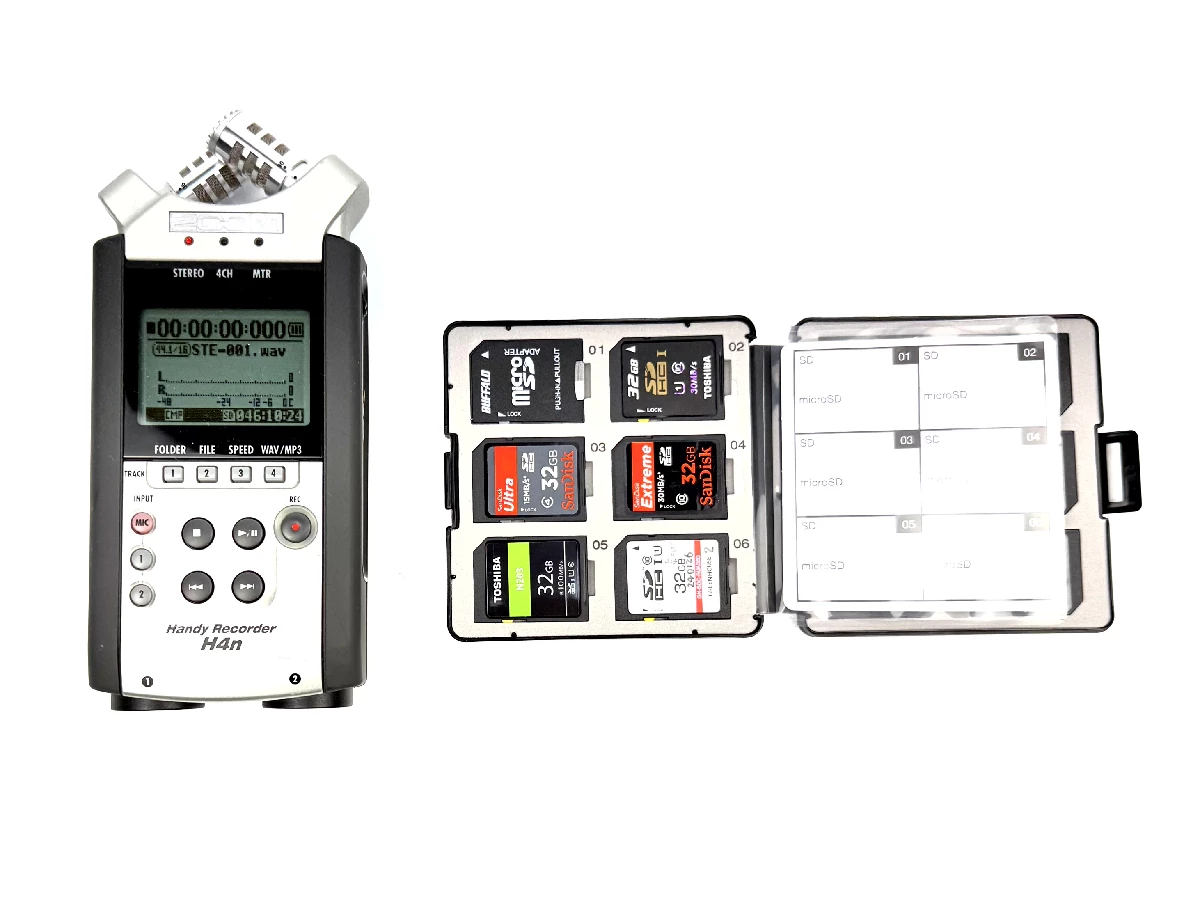
With a cassette tape, even if the deck malfunctioned and chewed up the tape, you could, in the worst case, splice the broken section with splicing tape and restore it.
I have no intention of claiming analog is superior. But physical objects had a “last resort.” If it breaks, splice it back together. If it tears, sew it up. That is the fundamental difference from “data,” “software,” and “apps,” which have no physical form.
My DAT Walkman no longer works. The last time I used it was 2007. After that, hoping to extend its life as long as possible, I rushed it to a Sony service center and had the head, rubber parts, volume control, switches, and even the scratched housing replaced with new parts — an attempt at active preservation. But after sitting unused for several years, it stopped working entirely.
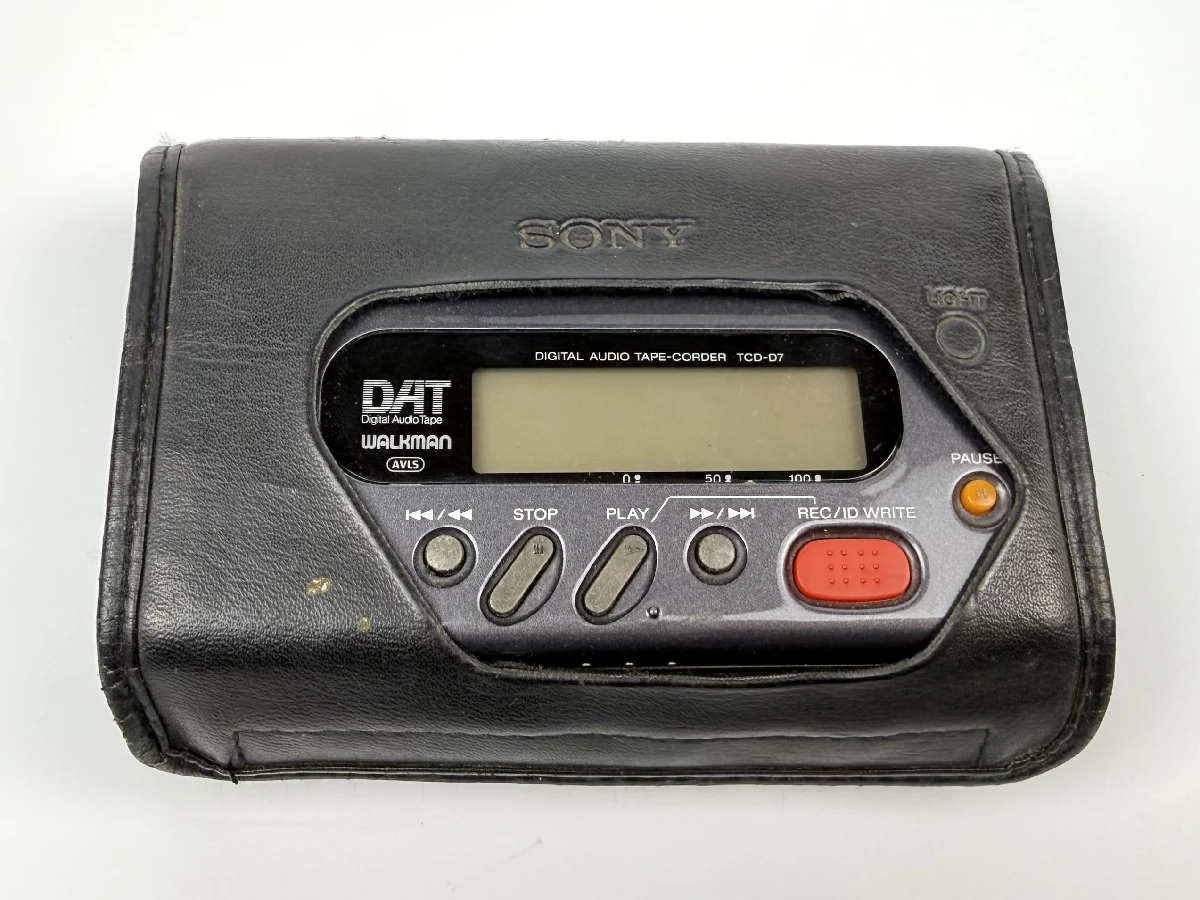
In my younger days, I believed DAT would become the dominant format. My media rack still holds over 100 DAT tapes. Many contain precious live recordings. A library of memories.
Then around 2000, I heard that Sony was withdrawing from DAT equipment production. In a panic, I bought Sony’s last desktop DAT deck, the DTC-ZA5ES. Knowing DAT had no future, I also invested in two expensive spare heads. I have replaced every electrolytic capacitor to extend its life, and for now it remains operational — but when the head dies, that will be the end.
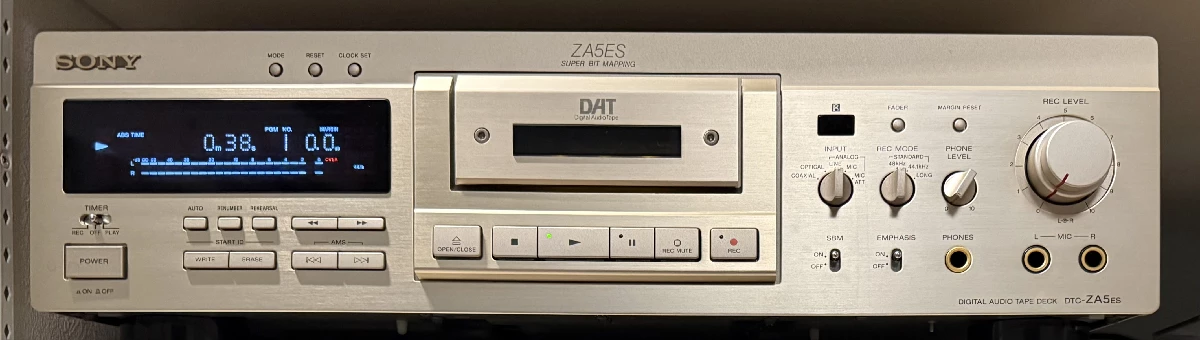
Even record labels, I hear, are desperately searching for working DAT players. I want to proceed with backups, but the audio CD-R recorder — the backup destination — is itself nearing the end of its life. Replacement pickup lenses are no longer available. Of course, since the data is digital, I could, in the worst case, transfer it via PC. But I have my own standards when it comes to sound quality. The escape routes are closing, one by one.
And yet, ironically, the oldest things have survived the most stubbornly.
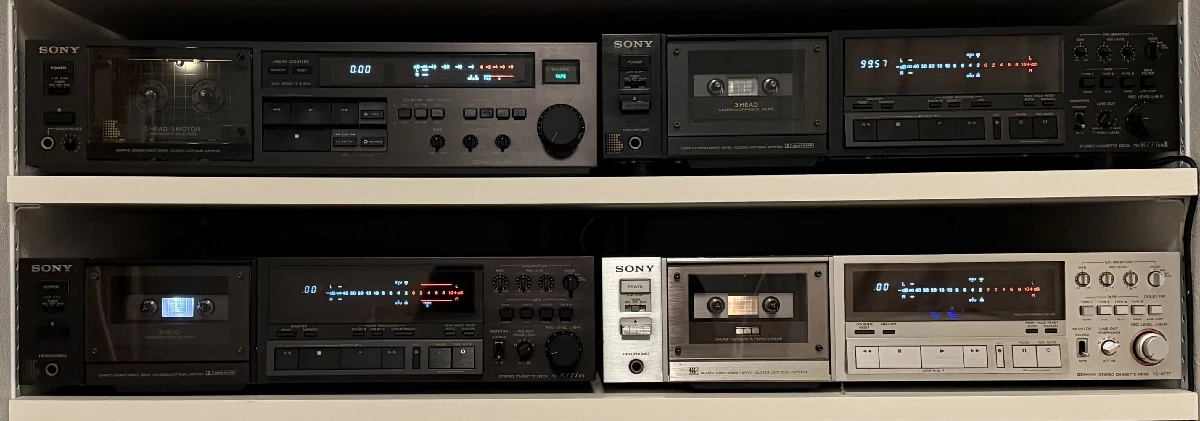
Four Sony cassette tape decks. Built between 1980 and 1986. All kept operational through self-performed maintenance. The tape library exceeds 500 cassettes. Every one of them is playable.
In the 2000s, I began backing up to CD-R, but gave up before reaching 50 discs. The audio CD-RW recorder’s pickup had a surprisingly short lifespan, and even mobilizing all spare pickups, backing up over 500 tapes seemed impossible. Besides, since the recordings are analog, every backup and editing session required my constant attendance. The original purpose was to enjoy music, yet it had turned into an ordeal. A waste of time, too.
I gave up midway and chose a different path: assembling four high-quality, long-lasting decks and backing up the playback environment itself. Both the CD-R recorder and the cassette decks have had every electrolytic capacitor replaced. But heads and pickups are consumables. When the spares run out, it is over.
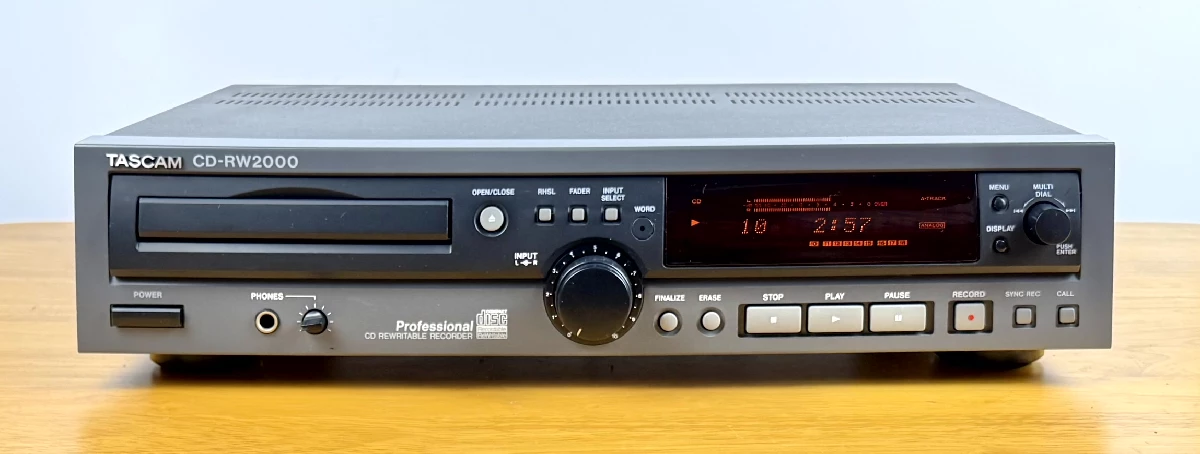
That is why securing spare parts is a lifeline.
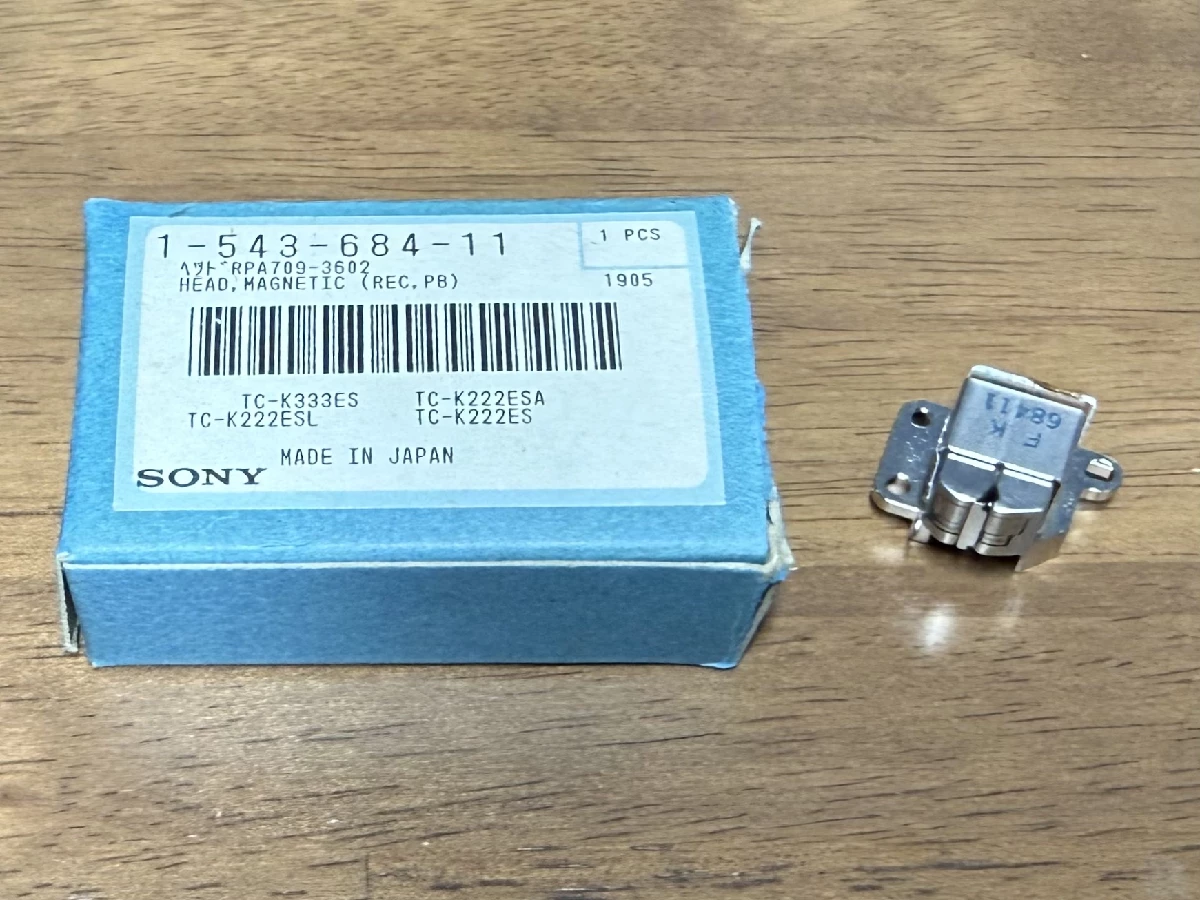
The DAT Walkman is dead. The DTC-ZA5ES, barely hanging on, has only one spare head left. I can no longer use it the way I once did.
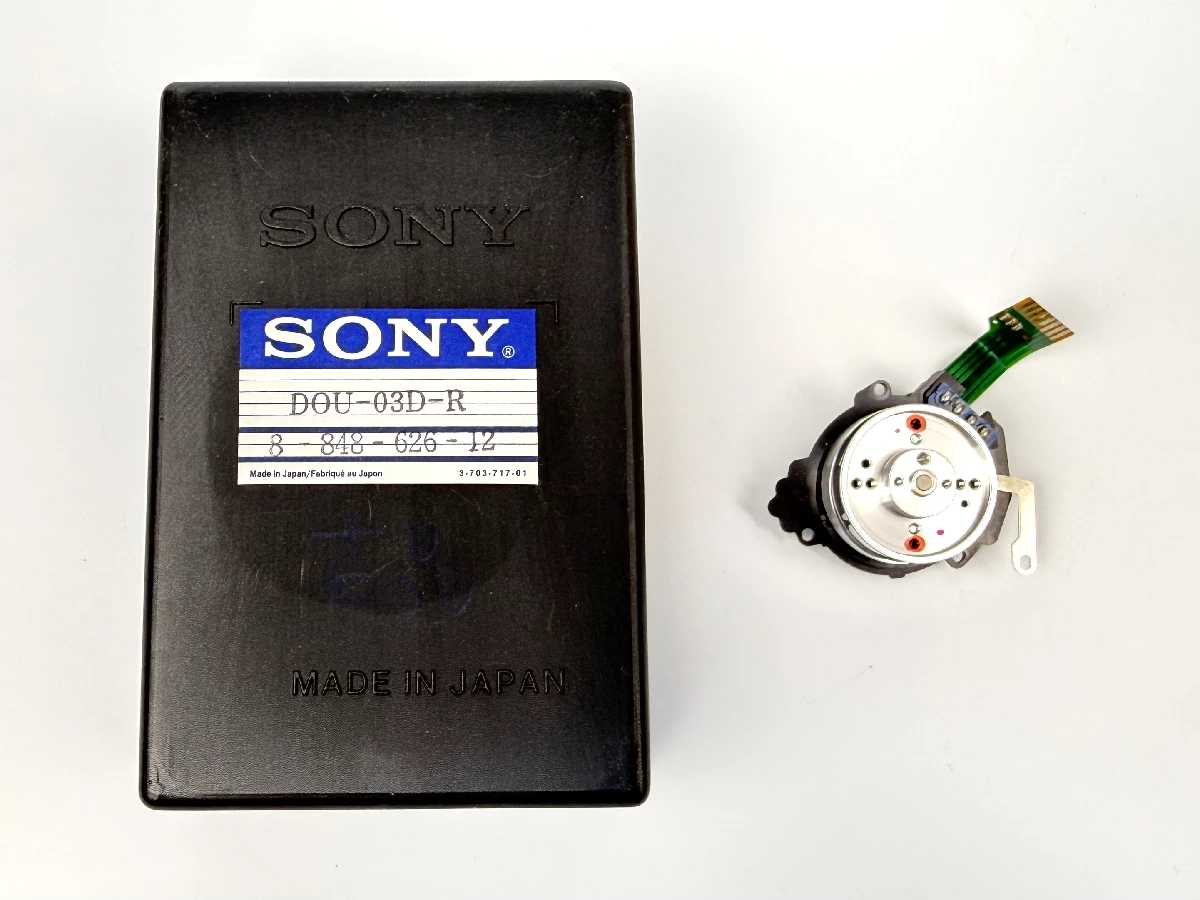
What I could maintain with my own hands survived. What I could not, vanished.
Triple Rupture — Time, Language, Institution
The gap in technical information is not solely a matter of time. There is also a language rupture.
The Japanese-language transistor databooks I own from the 1960s–80s are not merely “disappearing information.”
More precisely, they should be described as:
Information that was almost invisible from the English-speaking world.
In some cases, such as Toshiba, Japanese-language datasheets can be found on alldatasheet.com or datasheet.com. But for others — Sony, Hitachi, Rohm — the materials themselves are difficult to obtain in the first place.
In any case, the vast majority of these materials remain untranslated to this day.
And there is yet another rupture that tends to be overlooked: an institutional rupture.
Japan’s semiconductor industry once had a system known as “unified part numbers.” The 2SAxxxx / 2SCxxxx numbering system managed by EIAJ (now JEITA) functioned as a common language across manufacturers. A single part number told you the basic nature of the device, regardless of who made it.
From the mid-1990s onward, however, manufacturers increasingly adopted proprietary numbering systems. By the early 2000s, new registrations had effectively ceased, and the common coordinate system quietly disappeared.
Then in 2022, CQ Publishing’s Transistor Specification Tables and FET Specification Tables went out of print. This series had systematically cataloged Japanese semiconductor information for approximately sixty years. The last “common reference point” was gone.
What we face is a threefold rupture.
| Type of Rupture | Cause |
|---|---|
| Temporal Rupture | The “information valley” of the 1990s–2010s |
| Language Rupture | The gap between Japanese and English |
| Institutional Rupture | Decline of unified part numbers and discontinuation of the CQ Publishing specification table series (2022) |
The result of this triple rupture is that information on vintage Japanese semiconductors is in an extremely inaccessible state.
If nothing is done, the people who can access this information will eventually be gone.
If nothing is done, these materials will be quietly discarded as “junk,” and the world will never even know what was lost.
Part Numbers Absent Even from Major Archives
Many people would say: “Datasheets? Just check datasheets.com or alldatasheet.com.”
Fair enough.
But there are part numbers that are not listed even there.
- Germanium transistors
- Japan-market-only minor part numbers
- Vintage devices from the 1950s–80s
- Special-purpose devices produced in small quantities for specific customers or government use
The search results read:
“No results found.”
Even the world’s largest datasheet archives have gaps. And some of those gaps are sitting on my bookshelf right now.
What I Can Do
The 1990s through around 2010. This “information valley” is being lost across many fields.
But I lived through that era in real time. I was actively buying transistors and collecting documentation.
What I have on hand now are primary sources and physical devices spanning the following periods.
| Period | Era |
|---|---|
| 1950s–1960s | Germanium transistor heyday |
| 1960s–1970s | Silicon transistor development |
| 1980s–1990s | Discrete device advancement |
| 2000s–2010s | Discrete device decline |
For each of these periods, I hold:
- Physical devices (transistors, J-FETs, MOSFETs, various diodes, etc.) procured from domestic electronics shops and authorized distributors
- Semiconductor manufacturers’ databooks and catalogs (paper) and datasheets (PDF)
- Electrical characteristic measurement data and SPICE models produced with this site’s original measurement instruments
Incidentally, this information serves another purpose as well.
In the vintage semiconductor market, the proliferation of counterfeits has become a serious problem. From sophisticated remarked parts to crude fakes that bear no resemblance to the genuine article, counterfeit devices of every caliber are in circulation. Even after nearly forty years of examining transistors, I sometimes cannot judge by appearance alone. But instruments do not lie. By cross-referencing databook specification values, photographs of authentic devices, and electrical characteristic data from original measurement instruments, one can verify with high confidence whether a device in hand is genuine.
What this site provides is not just a record. It is practical information that helps people who are buying parts, building amplifiers, and designing circuits right now to protect themselves.
On this site, I will publish information based on these primary sources — in English, accompanied by device photographs and measurement data.
To leave a record. That is why this archive exists.